

Chicago – May 02, 2025
In the village of Churanda, located in Indian-administered Kashmir and surrounded by mountains, teachers begin the school day by leading children in morning prayers, hoping that the peaceful sounds of nature—like the rustling of walnut trees and the calls of birds—are not replaced by the sounds of artillery fire.
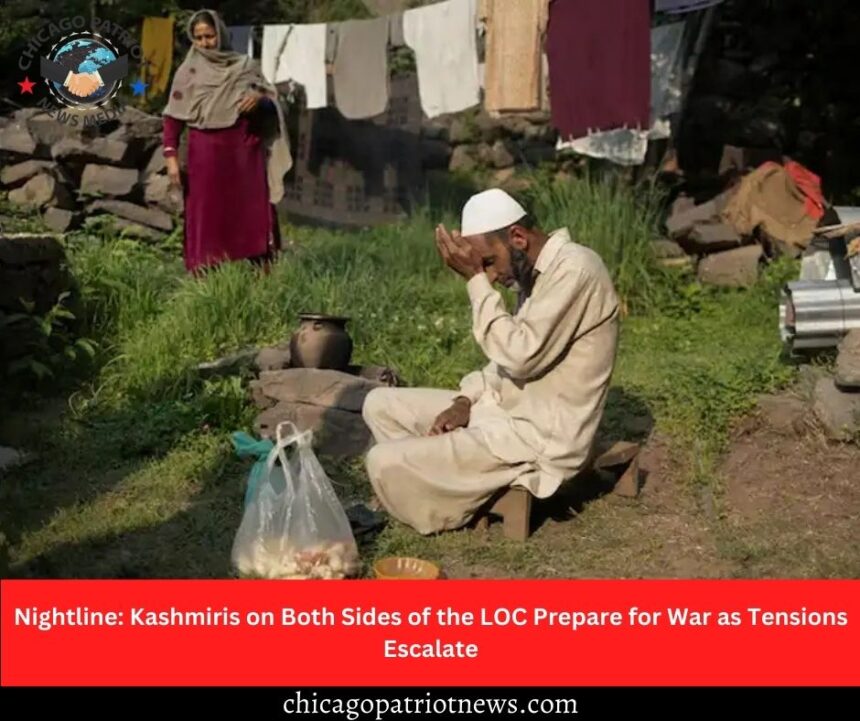
Despite the usual school activities, teacher Farooq Ahmad noted that “fear among the parents is running high” following a deadly attack on tourists, an incident that has raised concerns on both sides of the Line of Control (LoC), the dividing line between India and Pakistan. Many residents fear the escalation of tensions could lead to full-scale conflict.
The attack, carried out by suspected militants, left at least 26 tourists dead at a popular mountain spot. India has accused Pakistan of being involved in the attack, a claim Islamabad denies, while Pakistan asserts it has “credible intelligence” suggesting that India may be preparing for military action.
In Churanda, residents can see both Indian and Pakistani soldiers stationed at outposts along the border. Elders in the village recount that at least 18 people have died in cross-border firing between the two nations over the years. On the Pakistani-administered side of the LoC, residents of Chakothi village have constructed fortified shelters along the hillsides, preparing for any potential escalation.
In Muzaffarabad, the capital of Pakistan-administered Kashmir, authorities have set up a 1 billion Pakistani rupee ($3.5 million) emergency fund and sent sufficient food, water, and medical supplies to villages along the LoC, ensuring they will last for two months. Fearing Indian airstrikes, officials have also closed all religious seminaries in the region for ten days.
Additionally, preparations are underway to repair infrastructure damage, with equipment being moved to strategic locations near the LoC. Rescue and civil defense agencies have been placed on high alert. The Pakistan Red Crescent, led by Gulzar Fatima, has mobilized supplies and staff, including first aid providers, in anticipation of a potential Indian military response.
The organization is preparing relief camps with tents, hygiene kits, and cooking supplies to accommodate up to 500 families, should there be a mass migration from areas near the border.