

Chicago Friday, May 16, 2025
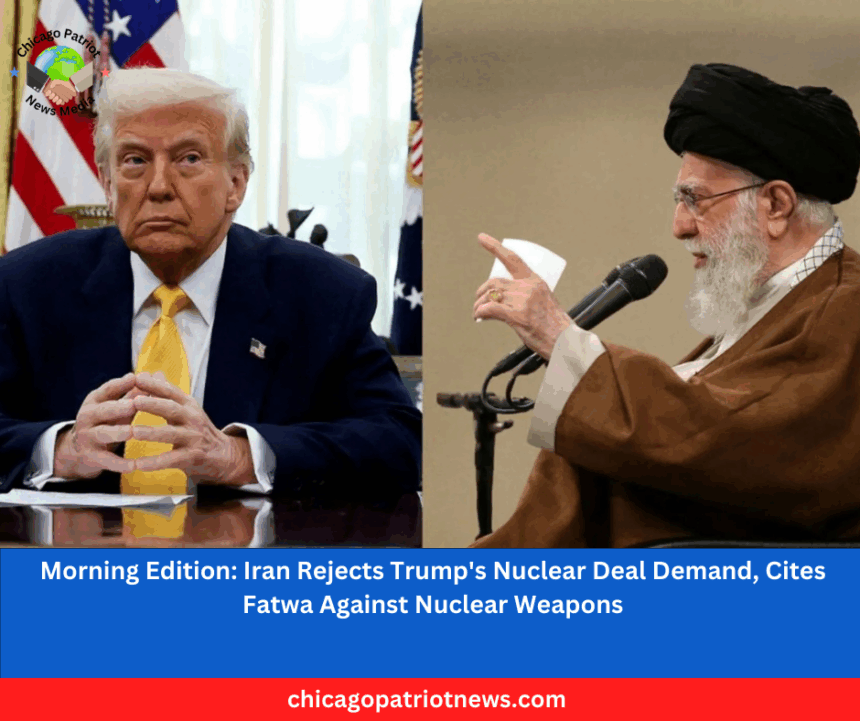
Iran has responded to Donald Trump’s call for a nuclear deal, with President Masoud Pezeshkian saying it’s “easy to verify” Iran’s nuclear activities. This comes after Trump sent a proposal through the UAE to revive discussions on limiting Iran’s nuclear capabilities. However, Iran rejected direct talks with the US, instead opting for indirect negotiations through Oman. Trump warned Iran that failing to comply could lead to potential military action and secondary tariffs.
Current Developments
- Indirect Talks: Iran has agreed to indirect talks with the US through Oman, but rejected direct negotiations.
- European Involvement: Iran is also engaged in talks with European powers, including the UK, France, and Germany, in Istanbul. These talks focus on Iran’s nuclear program and potential restrictions.
- Potential Agreement: Iran has signaled willingness to accept limitations on civilian nuclear use in exchange for lifting economic sanctions.
Global Implications
- Economic Impact: The outcome of these talks could significantly impact global markets, particularly in Europe.
- Geopolitical Tensions: The situation is being closely watched by global leaders, as tensions between Iran and the US continue to rise.
- Historical Context: Iran’s past experiences, including the 1941 Anglo-Soviet invasion, have shaped its diplomatic relations and geopolitical stance.