

Chicago – July 24, 2025
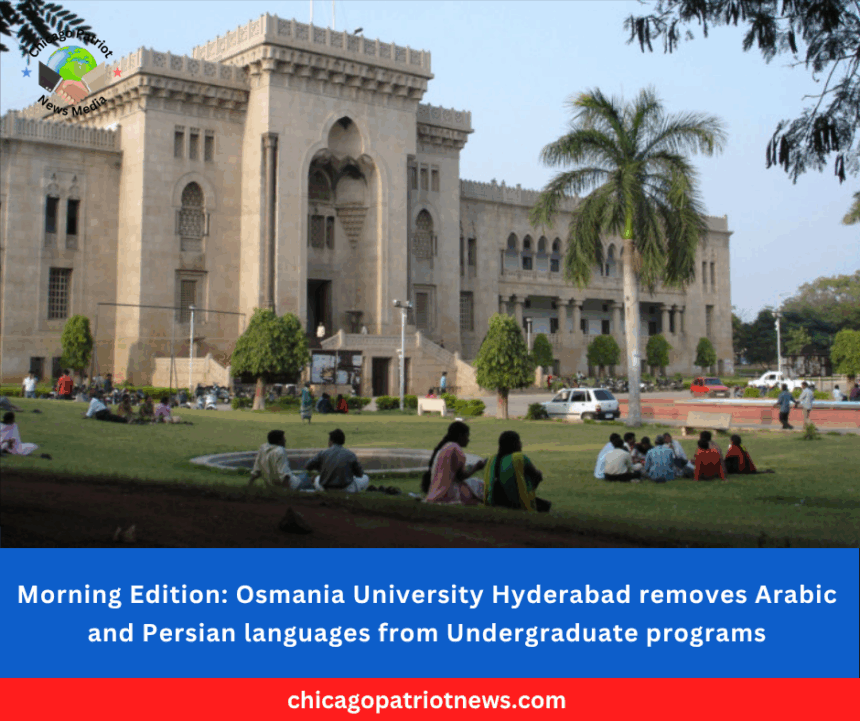
Osmania University in Hyderabad has reportedly removed Persian and Arabic from its undergraduate degree syllabus, sparking significant debate among students, alumni, and scholars.
This move marks a departure from the university’s historic legacy. Established in 1917 by the Nizam, Osmania embraced Urdu as the medium of instruction and included classical departments such as Arabic and Persian alongside Sanskrit, English, Telugu, and Kannada . Over a century, these languages formed a vibrant part of the university’s Oriental studies, connecting students with centuries of Deccan cultural and literary traditions.
The decision has triggered concerns that sidelining these classical languages undermines Osmania’s multicultural heritage and diminishes academic diversity. Advocates warn that without institutional support, Persian and Arabic—already challenged by diminishing enrollments in India—might fade further from university curricula .
Critics argue that language departments play a crucial role in preserving historical manuscripts, promoting interfaith understanding, and enriching literary scholarship. As debate intensifies, stakeholders are calling for transparent communication from university authorities, urging clarity on whether this is a strategic shift, temporary realignment, or a permanent change—while emphasizing the need to protect Osmania’s century-old commitment to classical language education.