

Chicago – April 14, 2026
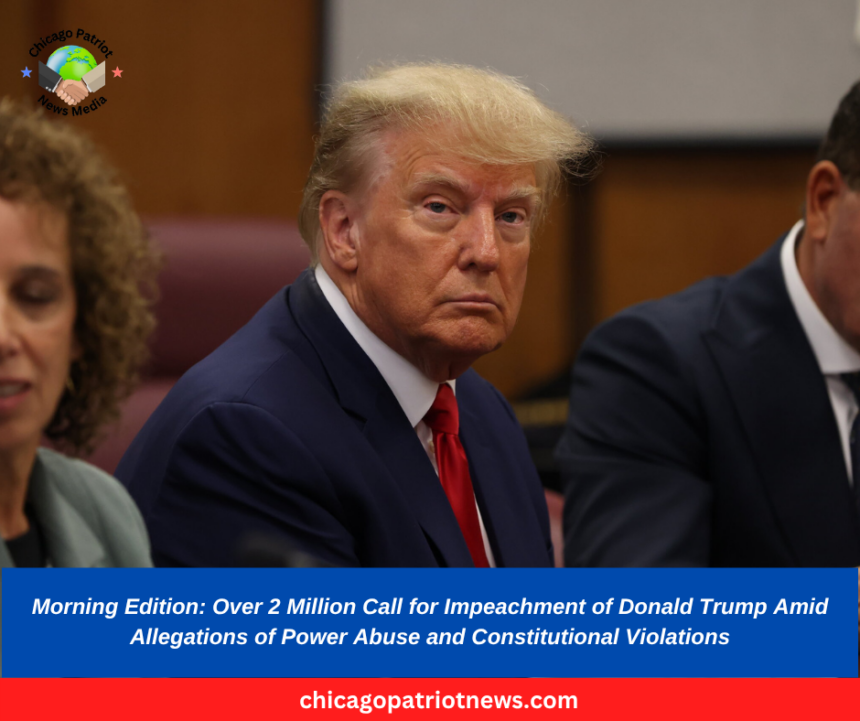
A growing segment of Americans and political advocacy groups are renewing calls for the impeachment of former President Donald Trump, citing a wide range of alleged constitutional violations, abuses of power, and concerns about democratic norms.
Advocates argue that Congress—particularly the U.S. House of Representatives—should have initiated impeachment proceedings earlier, asserting that failure to act has weakened institutional checks and balances. Critics contend that accountability mechanisms outlined in the Constitution are essential to maintaining the rule of law.
Among the concerns raised are alleged violations of the Emoluments Clauses, which prohibit federal officials from accepting certain benefits from foreign or domestic governments. Some watchdog groups have also pointed to claims of campaign-related misconduct tied to the 2024 election cycle, though these allegations remain the subject of ongoing political and legal debate.
Other accusations cited by critics include the misuse of executive authority, retaliation against perceived political adversaries, and efforts to undermine independent oversight institutions. Concerns have also been raised about the use of emergency powers, immigration enforcement policies, and disputes with the judiciary, with opponents arguing that such actions risk upsetting the constitutional balance between the executive, legislative, and judicial branches.
Additionally, some activists and commentators have criticized decisions related to pardons and legal interventions involving political figures, arguing these actions could represent potential abuses of presidential authority. However, supporters of the former president maintain that many of these actions fall within the broad powers granted to the executive branch and characterize impeachment efforts as politically motivated.
Legal experts note that impeachment is inherently both a constitutional and political process. While the House has the authority to bring articles of impeachment, any conviction would require a two-thirds vote in the U.S. Senate—a high threshold that historically reflects bipartisan consensus.
Public opinion on impeachment remains deeply divided. Some Americans view it as a necessary safeguard against executive overreach, while others see repeated impeachment efforts as contributing to political polarization.
As debates continue, analysts emphasize that any future impeachment proceedings would likely depend on the emergence of new evidence, shifting political dynamics, and the broader national climate.