
Chicago – April 22, 2026
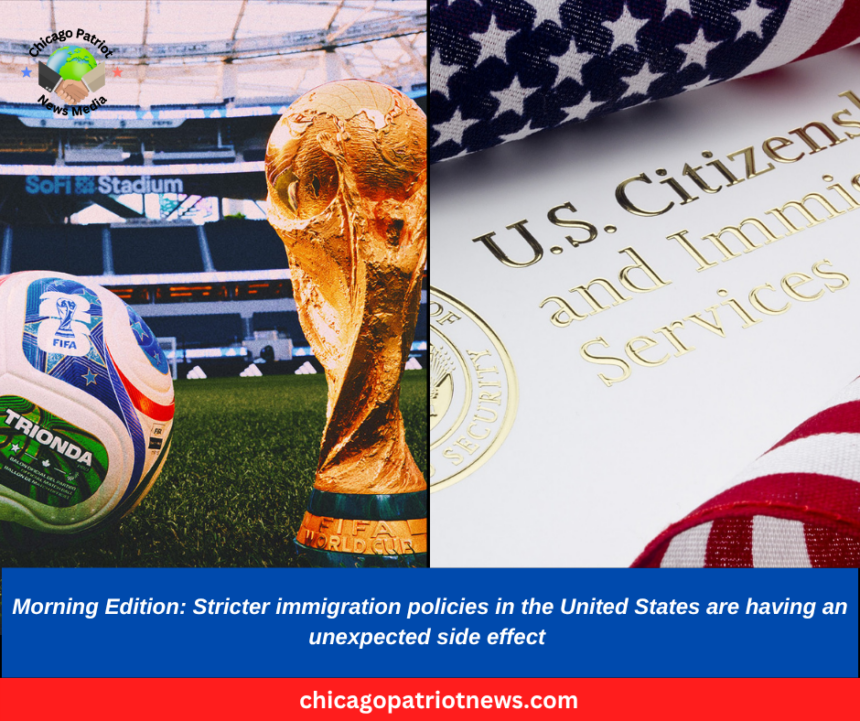
Some international football fans are choosing to skip the 2026 FIFA World Cup matches hosted there.
According to recent reporting, concerns over aggressive enforcement by U.S. Immigration and Customs Enforcement, expanded visa restrictions, and heightened screening measures are discouraging travel. Some fans cite fears over raids, detentions, or even scrutiny of their social media history as reasons to stay away.
Others are affected more directly by policy. Travel bans and visa limitations mean that supporters from certain countries may struggle—or fail—to obtain entry, even if they hold match tickets. In some cases, additional requirements like visa bonds of up to thousands of dollars are adding financial barriers, further reducing accessibility.
Beyond legal hurdles, perception also plays a major role. Reports of enforcement actions and broader immigration crackdowns have created unease among fans who might otherwise travel freely to global tournaments. Some long-time World Cup attendees have opted to boycott US-hosted matches entirely, choosing instead to attend games in co-host countries like Mexico or Canada.
These developments highlight a broader tension: while the World Cup aims to bring global audiences together, domestic immigration policies may be limiting who feels able—or welcome—to attend.