

Chicago – November 16, 2025
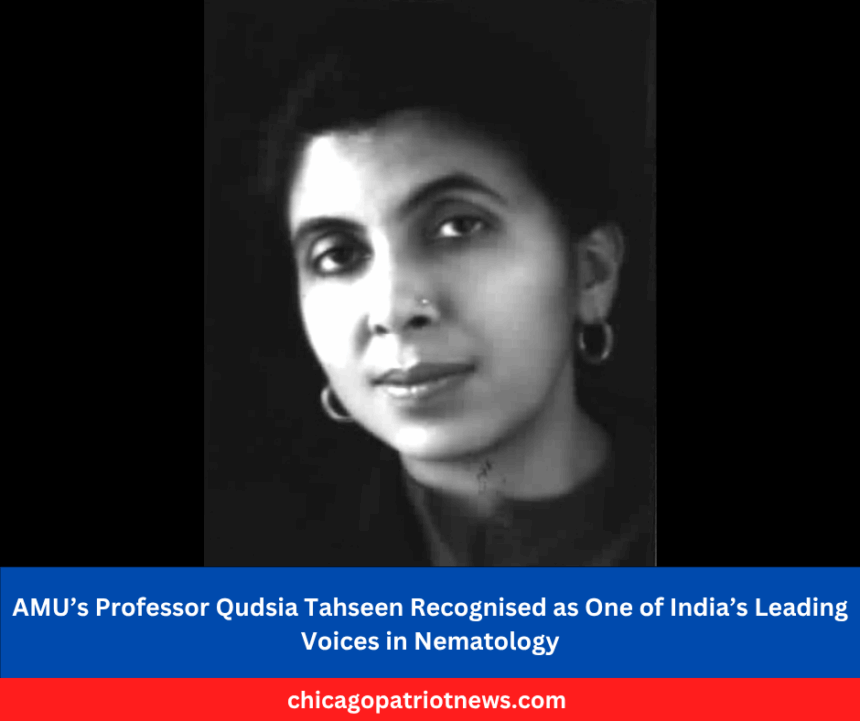
Aligarh Muslim University has spotlighted one of its most accomplished scientists, Professor Qudsia Tahseen, whose work in nematology has earned her national distinction and rare international honours. Often referred to as India’s “Nematode Queen,” her career marks one of the most significant scientific journeys to emerge from AMU’s Department of Zoology.
Raised in Azamgarh and academically shaped at AMU, Professor Tahseen has built a research legacy centred on nematodes — microscopic roundworms that play essential roles in soil systems, freshwater ecosystems, and environmental health. Her investigations span classical and molecular taxonomy, developmental biology, and the ecological behaviour of nematode populations, forming a comprehensive body of work that has strengthened biodiversity and soil science research across the country.
Her contributions have earned global recognition. In 2005, she became the first Asian scientist to receive the Special Award for Sustained Excellence in Nematology from the Organization of Nematologists of Tropical America (ONTA), acknowledging her expertise in taxonomy and her long-term impact on nematode research. She is also a fellow of two major national science academies in India, further consolidating her standing as a leading figure in biological sciences.
Colleagues describe her scientific approach as both meticulous and expansive — using the microscope to map ecosystems, trace developmental patterns, and identify new nematode species. Her work has also shaped the training of young researchers at AMU, where she continues to play a central role in advancing interdisciplinary research and environmental studies.
Though her subjects of research are among the smallest living organisms, Professor Qudsia Tahseen’s influence in shaping modern nematology — in India and abroad — is anything but small.