

Chicago – May 04, 2025
Apple Faced $900 Million Cost Increase from Tariffs
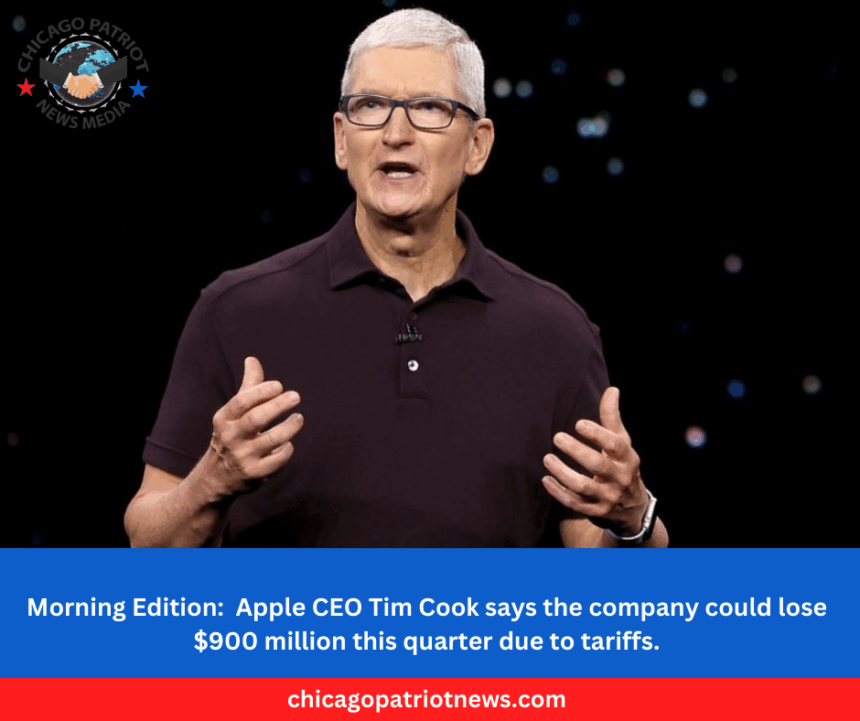
Apple CEO Tim Cook stated that tariffs imposed under President Donald Trump’s administration had been expected to raise the company’s costs by $900 million during the quarter. He explained during a quarterly earnings call that this projection assumed no changes in global tariff policies or the addition of new duties. To mitigate these impacts, Apple had begun shifting iPhone production for the U.S. market from China to India. Cook anticipated that most iPhones sold in the U.S. would soon originate from India.
The move highlighted Apple’s efforts to diversify its supply chain beyond China, especially in light of the steep 145% tariffs introduced by the Trump administration. Although smartphones and electronics with semiconductors were exempt from the highest tariffs, iPhones made in China still faced a base 20% levy. Cook acknowledged the complexity and vulnerability of relying heavily on one manufacturing location, saying the company had recognized the risks involved years earlier.
Supply Chain Shifts and Market Impacts
While nearly 90% of iPhones had continued to be produced in China, Apple had gradually relocated manufacturing of other products. Cook shared that Vietnam was becoming the main production hub for iPads, Macs, Apple Watches, and AirPods sold in the U.S., while devices for non-U.S. markets would still primarily be made in China.
Despite the pressures from tariffs, Apple delivered strong financial results for the January to March quarter, with revenue growing 5% year over year to $95.4 billion. iPhone revenue also rose 2% to $46.8 billion. Cook noted that Apple had minimized the immediate impact of tariffs by optimizing inventory and supply chain strategies.
However, Apple’s sales in Greater China, including Hong Kong and Taiwan, declined by 2%, totaling $16 billion. The dip came amid growing competition from local smartphone brands in China, Apple’s second-largest market.
Although the Trump administration had pushed for Apple to move iPhone production to the U.S., analysts argued that doing so would be highly impractical. Dan Ives of Wedbush Securities warned that the cost of an iPhone could potentially triple to around $3,500 if produced domestically.