

Chicago – November 10, 2025
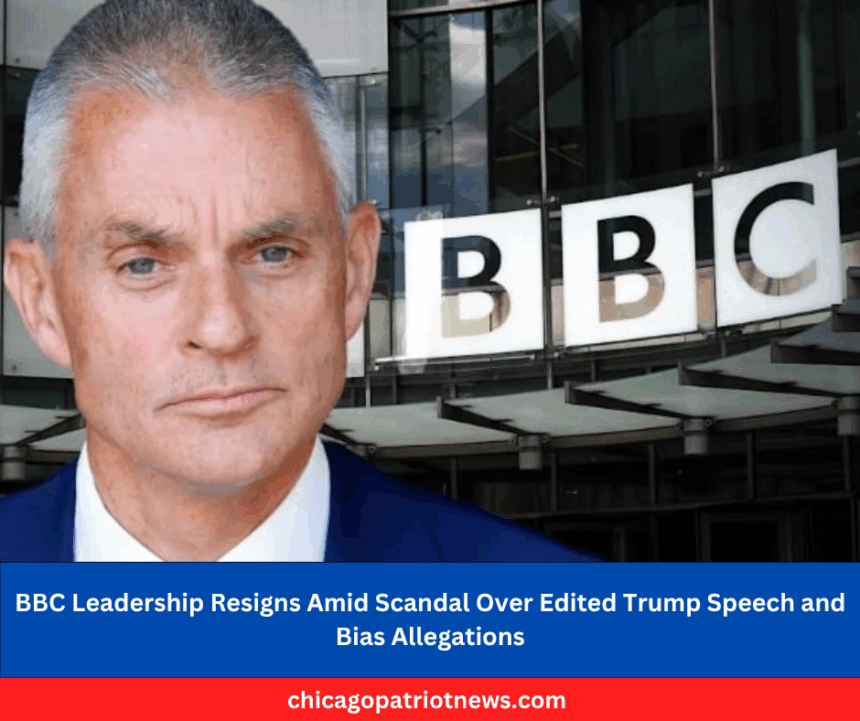
In a dramatic shake-up for one of the world’s most influential broadcasters, BBC Director-General Tim Davie and News CEO Deborah Turness have both resigned following outrage over an edited clip of a Donald Trump speech used in a 2024 documentary. The controversy has triggered a wider reckoning over editorial integrity and alleged political bias inside the UK’s public broadcaster.
The resignations came after a leaked internal memo revealed that a BBC Panorama episode titled “Trump: A Second Chance?”, aired just before the 2024 U.S. election, had spliced two sections of Trump’s January 6, 2021 rally speech together, creating the impression that he urged supporters to march aggressively on the Capitol. The unedited transcript, however, shows those statements were made nearly an hour apart and in different contexts.
The revelation prompted furious backlash from the White House, with Trump calling Davie and Turness “very dishonest people” on Truth Social, accusing them of “doctoring” his speech to influence the election. Trump’s press secretary Karoline Leavitt labelled the BBC “100 percent fake news.”
In his resignation note, Davie said he took “ultimate responsibility” for the “mistakes made” and that it was “entirely my decision” to step down after five years leading the broadcaster. Turness said the controversy had reached a point where it was “damaging the BBC,” adding that while errors occurred, “recent allegations that BBC News is institutionally biased are wrong.”
The internal memo that triggered the resignations, written by former BBC adviser Michael Prescott, went beyond the Trump documentary. It accused the broadcaster of systemic bias in its coverage of Israel’s war on Gaza, transgender issues, and race, describing parts of the BBC’s reporting as “one-sided” or “ill-researched.” Prescott’s memo also alleged bias within BBC Arabic, claiming coverage “over-emphasised anti-Israel narratives” and misrepresented casualty data from Gaza.
The BBC’s Gaza coverage has been under scrutiny for months. Earlier this year, the UK’s media regulator Ofcom ruled that a BBC documentary about Palestinian children breached impartiality standards after it was narrated by the son of a Hamas official. At the same time, over 100 BBC journalists signed an internal letter accusing the network of giving Israel favorable coverage and suppressing critical stories.
The resignations come as the BBC faces an upcoming Royal Charter review in 2027 — a once-in-a-decade renegotiation that defines its purpose, funding, and independence. Culture Secretary Lisa Nandy called the allegations “incredibly serious” and said the review would help the BBC “adapt to a new era.” BBC Chair Samir Shah called the resignations “a sad day” but denied that the organization is “institutionally biased.”
The fallout underscores the precarious balance the BBC must strike between trust and accountability, especially as its credibility is questioned at home and abroad. Critics say the dual departure signals a “crisis of confidence” in the institution once viewed as the global gold standard of impartial news.