

Chicago – December 30, 2025
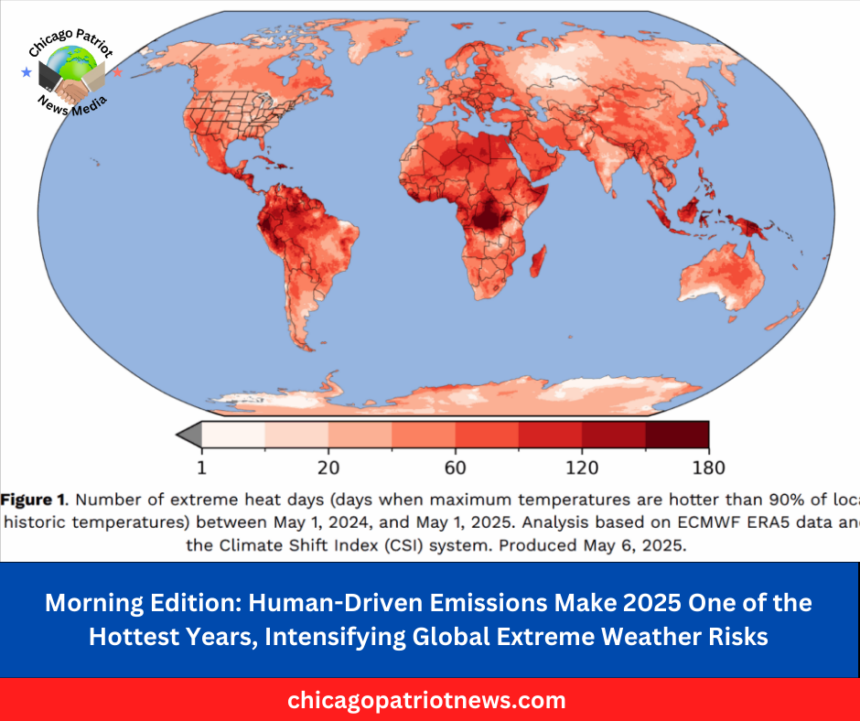
Climate scientists warn that human-driven greenhouse gas emissions have turned 2025 into one of the hottest years on record, intensifying deadly heatwaves, destructive storms, widespread droughts and fast-spreading wildfires across the globe. The findings were detailed in an annual study by researchers from the World Weather Attribution (WWA) network.
According to the report, emissions produced largely from the burning of fossil fuels pushed global temperatures to “exceptionally high” levels, amplifying extreme weather impacts with severe humanitarian and economic consequences particularly in vulnerable and low-income regions.
Despite the re-emergence of La Niña a natural climate pattern that typically brings a short-term cooling effect scientists say the warming influence of human activity has overwhelmed it. The EU’s Copernicus climate monitoring service has projected that 2025 is “almost certain” to rank as the second or third warmest year ever recorded.
The WWA study evaluated 22 major weather and climate disasters that occurred this year and found that climate change made 17 of them significantly more intense or more likely to occur. The remaining events could not be fully assessed due to limited data availability in remote regions.
The disasters examined ranged from record-breaking heatwaves in South Sudan and Western Europe to catastrophic rainfall in Southeast Asia and major wildfire outbreaks in Los Angeles. Collectively, these events claimed thousands of lives and forced millions of people from their homes, underscoring the accelerating risks of a rapidly warming planet.
Scientists involved in the report say the evidence is clear: continued fossil fuel emissions are driving climate extremes to unprecedented levels, and urgent global action is needed to reduce risks and protect communities worldwide.