

Chicago – November 19, 2025
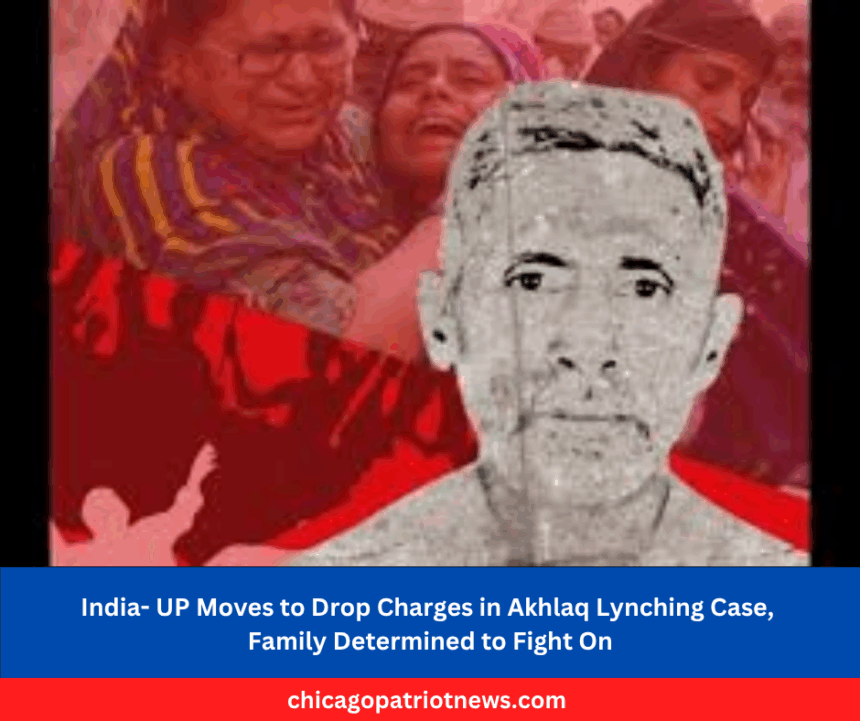
A decade after the killing of Mohammad Akhlaq in Uttar Pradesh province, the case that once shocked India has returned to national attention. The state government has asked a local court to withdraw all charges against the 19 men accused of lynching the 50-year-old ironsmith in 2015. The request has created a wave of disbelief and concern among the victim’s family and among rights advocates who followed the case from the beginning.
Akhlaq was attacked in his own home in the town of Dadri after a temple announcement claimed that he had slaughtered a cow and stored beef in his refrigerator. His family has consistently said the meat was mutton and that the allegations were fabricated. Akhlaq died on the spot while his son Danish, who was with him at the time, survived with severe injuries.
At the time, the incident was widely seen as the moment when cow vigilantism entered the national conversation. Protests erupted across the country, and the killing became a symbol of rising religious tensions. The accused were arrested within days, yet all of them secured bail within two years, some greeted with garlands by supporters.
The state government’s recent application argues that witness statements do not match. It says Akhlaq’s wife, daughter and son had named different numbers of attackers during various stages of the investigation. It also claims that the weapons described by the family were not recovered. Officials maintain that meat taken from the home tested positive for cow or its progeny. The family disputes this and says the samples were tampered with.
The court is expected to hear the matter on 12 December. Until it delivers a decision, the trial technically remains active. The family’s lawyer says the inconsistencies cited by the state are predictable in a chaotic mob attack and do not justify abandoning the case.
Akhlaq’s relatives say the withdrawal request has left them shaken. They left their village soon after the lynching and have never returned. They now fear for their safety even more, since all accused men already live freely in the area. His brother, Jaan Mohammad, says the latest move feels like an attempt to erase ten years of their struggle for justice.
The controversy has revived a broader debate about how such hate-crime cases are handled across India. Families in other high-profile cases, including those involving the deaths of Pehlu Khan in Rajasthan and Junaid Khan in Haryana, have raised similar concerns. Many say poor investigations, delayed action and political pressure have weakened the pursuit of justice.
For Akhlaq’s family, the legal battle is far from over. A separate case accusing them of cow slaughter is still pending, even though the first veterinary assessment described the meat as goat. Their lawyer believes that case was meant to intimidate the family and dilute the seriousness of the lynching.
As the family waits for the December hearing, they say they continue to trust the court. They believe that the judiciary remains their only path to closure in a case that changed the national conversation and left a lasting mark on India’s social fabric.