

Chicago April 9, 2025
India’s Ongoing Controversy Surrounding PM Modi’s Anti-Muslim Rhetoric
Indian Prime Minister Narendra Modi’s continued use of divisive language against Muslims has sparked intense debate and concern. With Modi widely expected to win the election, many are questioning his motives behind this rhetoric.
Possible Reasons Behind Modi’s Actions
- Personal Beliefs: Some speculate that Modi personally supports religious prosecution, while others believe he’s using this rhetoric to garner support from India’s 80% Hindu majority.
- Electoral Strategy: His divisive language may be intended to boost his electoral chances by appealing to Hindu nationalist sentiments.
Consequences of Modi’s Rhetoric
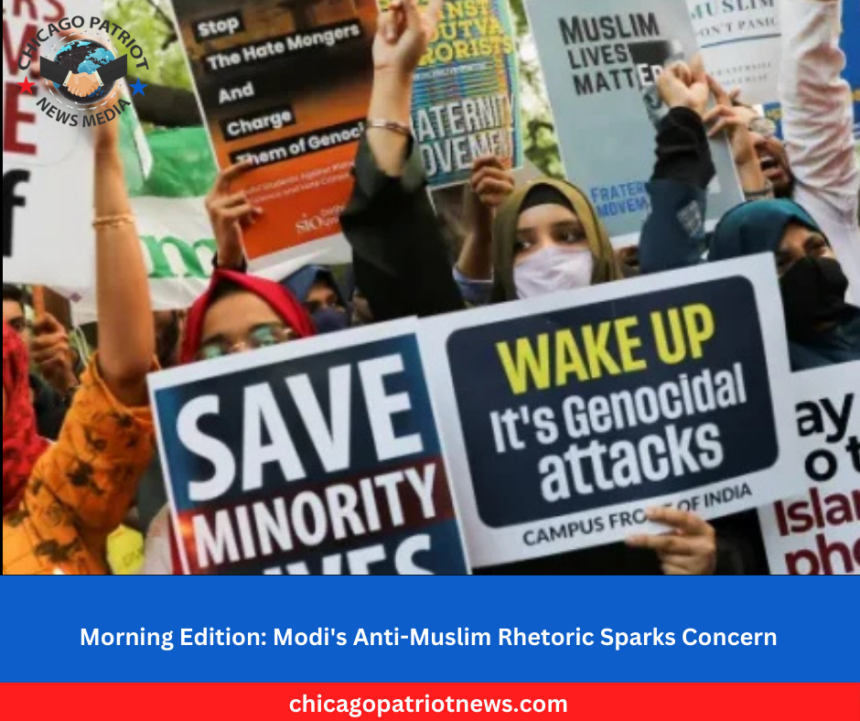
Modi’s language has led to increased anti-Muslim sentiments and violence in India. Human rights organizations have documented numerous instances of hate speech and attacks on Muslims, including:
- Violence and Discrimination: At least 28 reported attacks against religious minorities, resulting in 12 Muslim men and one Christian woman killed.
- Hate Speech: Modi’s speeches often contain Islamophobic remarks, aiming to undermine opposition and create fear among Hindus.
- Institutionalized Prejudice: Anti-Muslim sentiments have become entrenched in Indian society, partly due to Modi’s and his deputy Amit Shah’s actions.
Concerns About Authoritarianism
Modi’s government has faced criticism for suppressing free speech, arresting dissident journalists, and discrediting media outlets. This has led to concerns about his increasingly authoritarian leadership style.
International Reaction
The international community has taken notice of Modi’s actions, with many expressing concern about the erosion of democratic values and human rights in India. The BBC’s documentary on the 2002 Gujarat riots, which Modi was involved in, has been a point of contention, with the government labeling it as “colonial propaganda.”