

Chicago – March 20, 2026
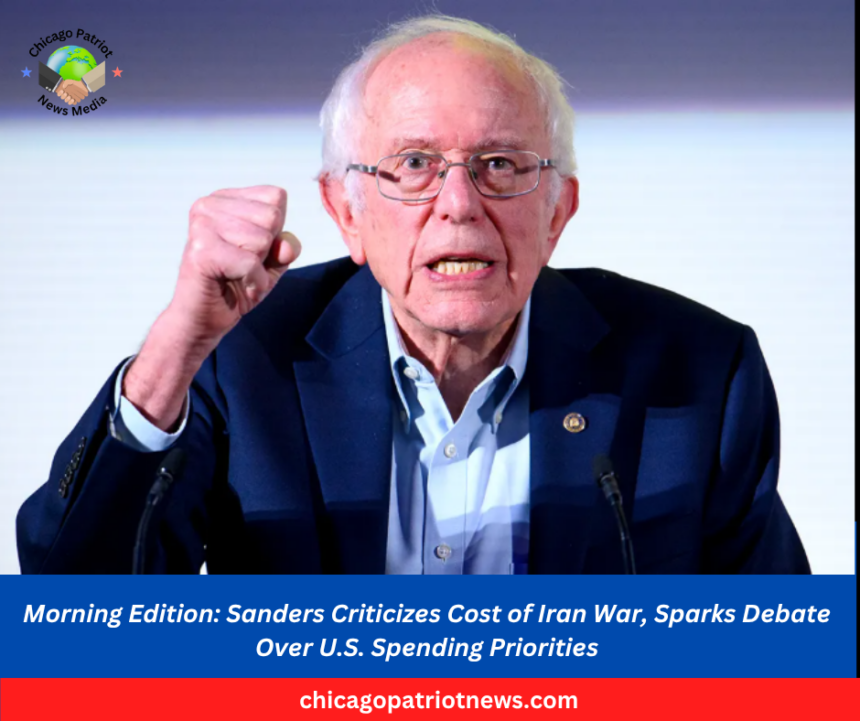
Sen. Bernie Sanders has drawn renewed attention to the financial cost of the U.S. military campaign against Iran, claiming the conflict has already cost $22.8 billion. In a widely shared post on X, Sanders contrasted the figure with a list of domestic programs he argued could be funded instead, including healthcare for millions of children, public housing, education, and student debt relief.
According to Sanders, the same amount could provide Medicaid coverage for 6.8 million children, fund 2.6 million public housing units, support Head Start programs for 1.3 million children, hire 240,000 teachers, or cancel $20,000 in student debt for one million borrowers. The comparison quickly gained traction online, fueling broader discussions about federal spending priorities.
Sanders has also described the conflict as an “illegal and unconstitutional war,” arguing that U.S. involvement, which began with joint strikes alongside Israel on February 28, lacks proper congressional authorization. Other Democratic leaders, including Senate Minority Leader Chuck Schumer and House Democratic leader Hakeem Jeffries, have raised similar concerns, linking war expenditures to potential cuts in domestic programs such as Medicaid and healthcare subsidies.
However, the total cost of the military operation remains a point of contention. Administration officials have offered lower estimates, with National Economic Council Director Kevin Hassett stating that expenses reached approximately $12 billion in the first two weeks. Differences in figures may stem from varying methods of calculating wartime costs, including whether long-term and indirect expenses are included.
Supporters of the military campaign argue that the strikes are necessary to counter a direct threat from Iran and maintain regional stability. They contend that national security spending cannot be directly equated with domestic programs, emphasizing the strategic importance of military action.
The debate highlights ongoing divisions in Washington over the balance between defense spending and domestic investment, as well as the legal framework governing U.S. military engagements abroad.