

Chicago – December 08, 2025
The U.S. Supreme Court on Monday will hear a landmark case that could fundamentally alter the future of independent federal agencies, overturn a key 90-year-old legal precedent, and shift the balance of power between Congress and the presidency.
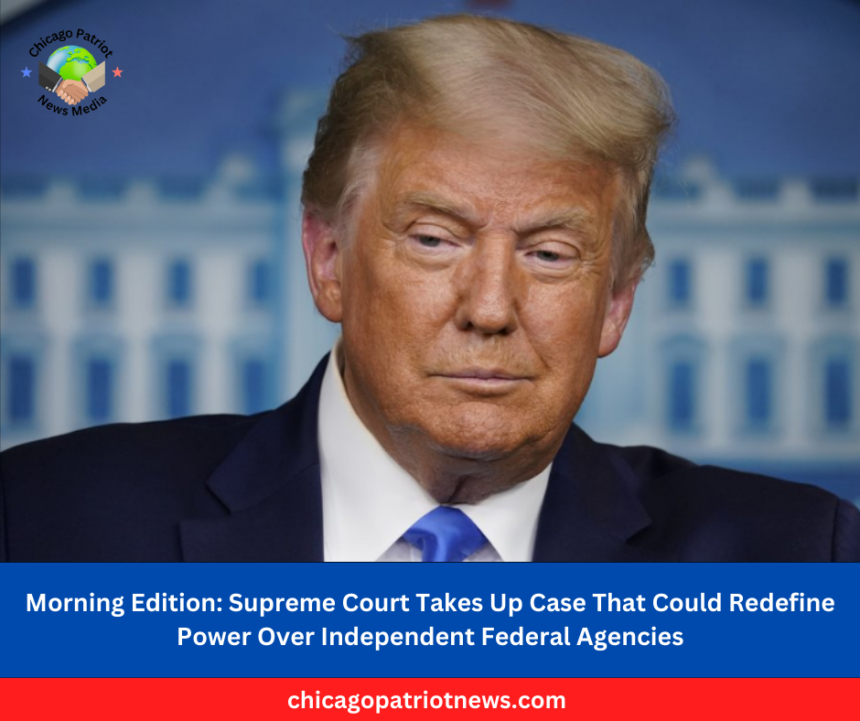
At the center of the dispute is whether former President Trump had the authority to dismiss Rebecca Kelly Slaughter from her position as a commissioner on the Federal Trade Commission. Slaughter, originally appointed by Trump in 2018 to fill a Democratic seat, was later reappointed by President Biden to a term scheduled to run until 2029.
However, in March, Slaughter received an abrupt email from the White House Office of Presidential Personnel informing her that she was being removed immediately. The message stated that her continued presence on the FTC “is inconsistent with the Trump Administration’s priorities.”
Since its creation in 1914, the FTC has operated as a bipartisan, independent regulatory body charged with safeguarding competition and preventing unfair business practices. By law, no more than three of the five commissioners can belong to the same political party, and commissioners can only be dismissed for “inefficiency, neglect of duty, or malfeasance in office.”
Slaughter was given no such statutory reason for her removal, prompting her to file a lawsuit. A lower court ruled in her favor, declaring the dismissal unlawful and ordering her reinstatement. The Trump administration appealed, arguing that presidents must have the freedom to remove agency officials who do not align with their agenda.
In September, the Supreme Court issued an emergency order allowing Slaughter’s firing to stand temporarily while the case proceeds. The justices voted 6–3 along ideological lines, setting the stage for a major constitutional showdown.
Legal experts say the ruling could either reaffirm long-standing protections designed to insulate regulatory agencies from political pressure or dismantle them entirely, dramatically expanding presidential authority over federal oversight institutions.