

chicago – July 09, 2025
In the late 19th and early 20th centuries, the fate of Jerusalem and the wider Arab world was deeply influenced by the conflicting ambitions of two key figures: Ottoman Sultan Abdul Hamid II and Sharif Hussain bin Ali, the Hashemite ruler of Mecca. At the heart of their rivalry lay the control of the Islamic holy lands and the destiny of Palestine — a land sacred to Muslims, Jews, and Christians alike.
Sultan Abdul Hamid II, who ruled the Ottoman Empire from 1876 to 1909, was known for his resistance to European colonial ambitions in the Muslim world. He famously rejected repeated offers from Zionist leaders, including Theodor Herzl, who sought permission to settle Jews in Palestine in exchange for financial aid to the ailing Ottoman treasury. Abdul Hamid II believed that Jerusalem and Palestine were inseparable parts of the Islamic Ummah, and their protection was a religious duty.
In contrast, Sharif Hussain bin Ali, the Hashemite Sharif of Mecca, sought greater autonomy from the Ottomans. In 1916, during World War I, he led the Arab Revolt against Ottoman rule, encouraged by promises from the British for Arab independence after the war. Unknown to Hussain, however, Britain had already signed the Sykes-Picot Agreement with France to divide the Arab territories and later issued the Balfour Declaration in 1917, expressing support for a Jewish homeland in Palestine.
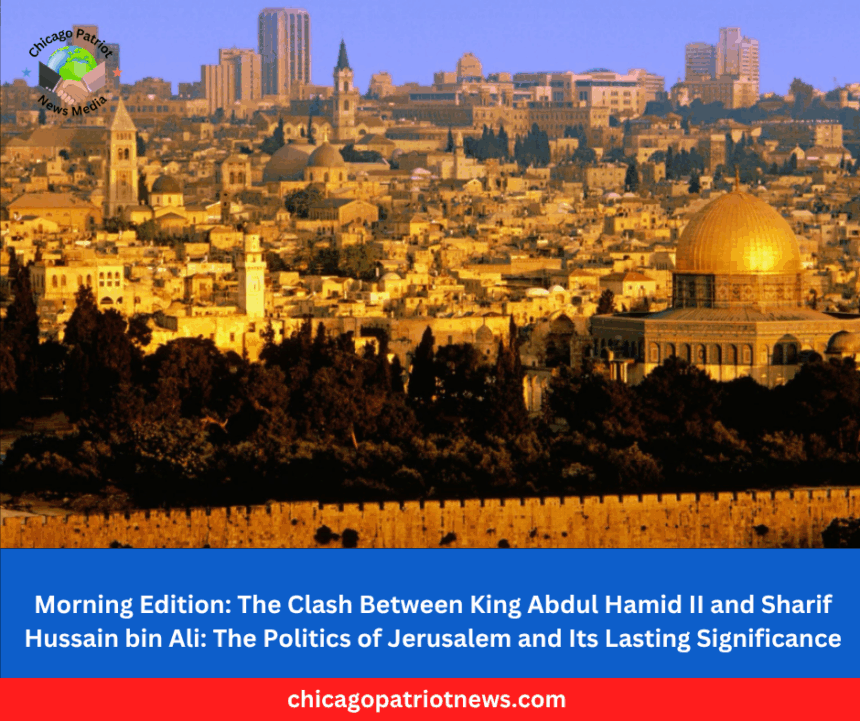
Jerusalem’s importance in this conflict was immense. For Muslims, it is home to Al-Aqsa Mosque, the third holiest site in Islam, and the first Qibla (direction of prayer) before it was changed to Mecca. For Jews, it is the site of the Temple Mount, the holiest place in Judaism.
The betrayal of Arab hopes after World War I, the fall of the Ottoman Caliphate, and the eventual British control of Palestine set the stage for the prolonged conflict over Jerusalem that continues today. King Abdul Hamid’s refusal to sell Palestinian land remains a symbol of steadfastness in Muslim memory, while Sharif Hussain’s revolt is viewed with mixed feelings, seen by some as a courageous uprising and by others as a tragic miscalculation that aided Western colonial designs.
In the broader historical and religious context, Jerusalem remains at the center of Middle Eastern politics, a city where faith, history, and geopolitics collide.