
Chicago – April 24, 2025
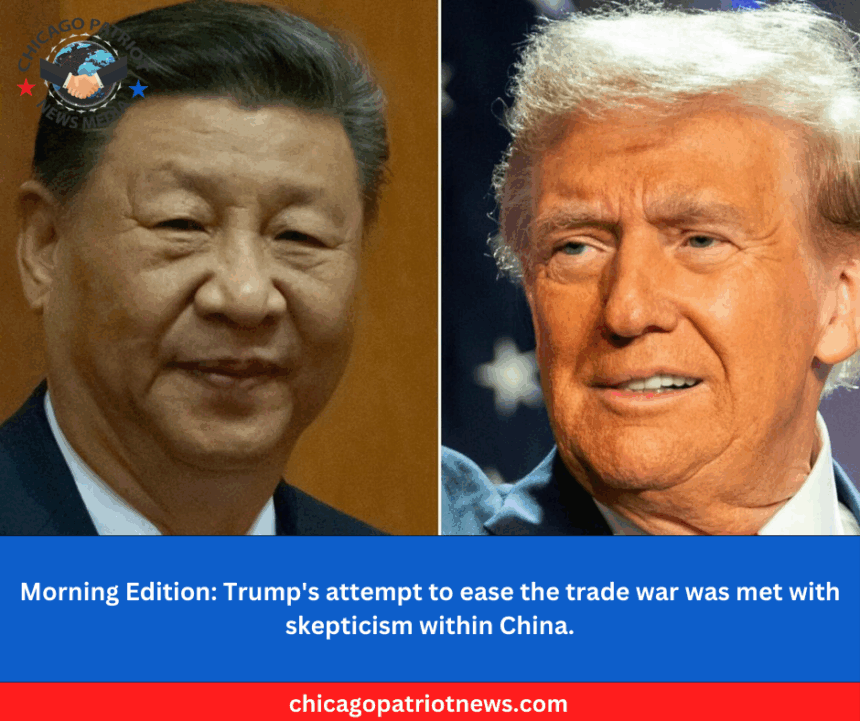
U.S. President Donald Trump has sparked optimism among global investors by hinting at a possible reduction in tariffs on Chinese imports. However, his apparent effort to cool tensions in the ongoing trade war with China has been dismissed by Chinese officials and mocked online, with some calling it a sign of retreat.
During a briefing in the Oval Office on Tuesday, Trump said the steep tariffs on Chinese goods would “come down substantially.” He also pledged to adopt a more conciliatory tone in negotiations, promising to be “very nice” and refraining from bringing up the origins of the Covid-19 pandemic.
Despite these remarks, Beijing has shown little interest in his gestures, insisting that all tariffs must be removed. Chinese Commerce Ministry spokesperson He Yadong said that since the U.S. initiated the tariff hikes, it should also be the one to eliminate them, urging Washington to respond to international and domestic calls to end the trade conflict through equal dialogue.
Contrary to Trump’s claim that U.S. and Chinese officials were in constant communication over the matter, China’s Foreign Ministry spokesperson Guo Jiakun denied any ongoing discussions, dismissing the reports as “fake news.”
Chinese policy advisors view Trump’s softer rhetoric as a response to domestic political pressure and a move to calm jittery markets. According to Wang Yiwei of Renmin University, Trump’s mixed signals have eroded trust in Beijing, with Chinese officials now doubting his reliability. He said Trump’s shifting stance is seen as a reaction to growing internal pressures, including market instability and inflation concerns.
Wu Xinbo, an expert from Fudan University, echoed this sentiment, saying that China feels no urgency to engage in talks and is prepared to withstand economic strain. He suggested that delaying negotiations could ultimately give China a stronger bargaining position.
While China continues to project resilience, highlighted by Xi Jinping’s recent diplomatic tour in Southeast Asia, its economy has slowed, and experts believe Beijing may eventually need to return to the negotiating table.
Trump’s change in tone came shortly after a private meeting with the CEOs of major U.S. retailers like Walmart, Target, Home Depot, and Lowe’s, who warned him about the economic damage caused by tariffs and the uncertainty they bring.
Many investment banks have warned that the current tariffs, along with China’s retaliatory 125% duties on American goods, could push both the U.S. and global economies into a recession.
Although Trump hasn’t provided exact figures for the tariff cuts, a senior White House official told The Wall Street Journal that the current 145% tariffs could be reduced to somewhere between 50% and 65%.