

Chicago – April 09, 2025
U.S. President Donald Trump’s broad tariff policies, aimed at much of the world, have officially taken effect and outside of China, Southeast Asia has been hit especially hard.
Vietnam and Cambodia are among the most affected, facing steep tariffs of 46% and 49% respectively. Other countries such as Thailand (36%), Indonesia (32%), and Malaysia (24%) are also heavily impacted. Meanwhile, the Philippines faces a 17% tariff, and Singapore 10%.
This is a major setback for a region that relies heavily on exports. Much of Southeast Asia’s impressive economic progress over the past 30 years has been fueled by its ability to export goods globally, especially to the United States.
In Vietnam, exports to the U.S. make up about 30% of its GDP, while in Cambodia, the figure is around 25%.
These new tariffs put that growth model at serious risk.
If the tariffs remain in place long-term, their effects will vary across countries, but Vietnam, Thailand, and Cambodia are likely to face particularly difficult economic and political challenges. Vietnam’s strategy of maintaining balanced relationships with both China and the U.S.—often called “bamboo diplomacy”—is now under pressure.
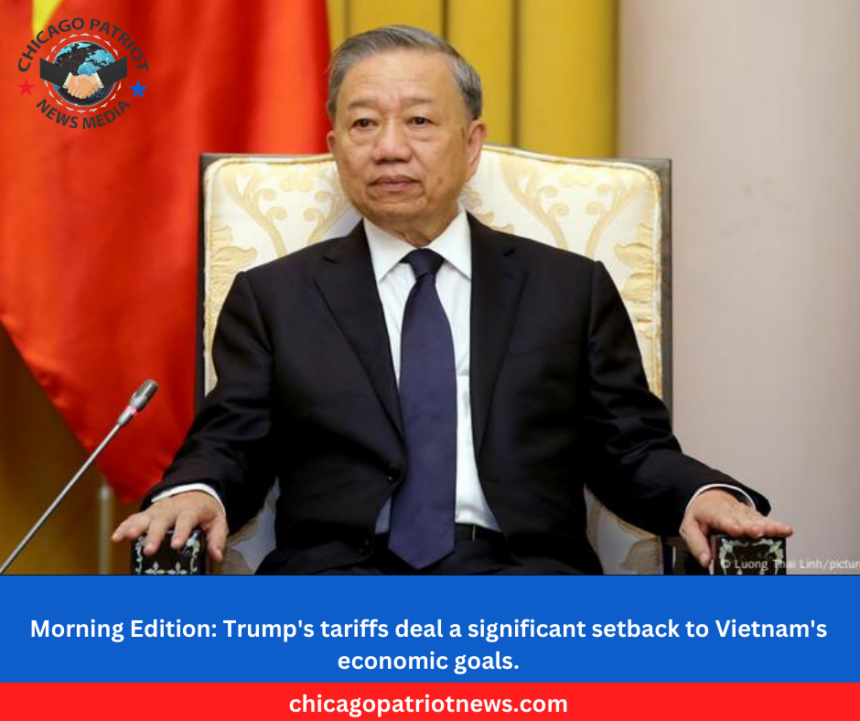
Led by newly appointed Communist Party Secretary-General To Lam, Vietnam has outlined an ambitious strategy to become a high-income, technology-driven economy by 2045, targeting annual growth of more than 8%. Expanding exports to the U.S.—its largest market—was a key part of this vision.
This economic alignment was a driving force behind Vietnam’s decision to upgrade its ties with Washington to a Comprehensive Strategic Partnership in 2023.
With limited political opposition and tight control over dissent, Vietnam’s Communist Party has long relied on economic performance to maintain its legitimacy. Many economists had already viewed the country’s economic targets as overly optimistic—these tariffs will make achieving them even more difficult.
Thailand, while less reliant on U.S. exports (under 10% of GDP), is grappling with a sluggish economy that has underperformed for over a decade. The government’s recent attempts to boost growth, such as a failed initiative to legalize gambling, have struggled. The new tariffs represent yet another economic hurdle.
For Cambodia, the impact could be even more politically destabilizing.
Prime Minister Hun Manet, who took over from his father Hun Sen two years ago, has maintained a similarly authoritarian style of governance. But his regime faces vulnerabilities.
Maintaining control has involved handing out economic favors—such as land and business monopolies—to rival factions. This approach has led to an oversupply of unsold property and growing public anger over land seizures.
The garment industry, which employs around 750,000 workers, has served as a crucial safety net for the country’s poorest citizens. But many of these jobs are now at risk due to the U.S. tariffs, posing serious economic and political challenges for the Cambodian government.


