

Chicago – November 06, 2025
The United States is preparing to establish a military presence at an airbase near Damascus, a move that would mark a turning point in Syria’s geopolitical alignment after years of isolation. According to multiple officials cited by Reuters, the deployment is part of a broader U.S. effort to broker a security pact between Syria and Israel, aimed at creating a demilitarized zone in southern Syria and reducing the threat of renewed regional conflict.
If finalized, the plan would signal Syria’s new strategic relationship with Washington following the fall of former president Bashar al-Assad, who had long been aligned with Iran. The airbase in question lies on the outskirts of the capital and is being prepared to host American operations for logistics, surveillance, refueling, and humanitarian missions. Syrian officials say the facility will remain under full Syrian sovereignty.
Pentagon reconnaissance teams have already visited the site in recent months. A Western defense official told Reuters that the airstrip was found to be operationally ready, and American C-130 aircraft have reportedly conducted test landings. While no date has been announced for the arrival of U.S. troops, the plans indicate a new level of military cooperation between the two countries.
The development follows a visit to Damascus in September by Admiral Brad Cooper, the head of U.S. Central Command, and Thomas Barrack, the U.S. envoy to Syria. They met with Syrian President Ahmed al-Sharaa, thanking him for his government’s role in the fight against the Islamic State. Officials from both countries have since confirmed that Syria is expected to formally join the U.S.-led global anti-ISIS coalition.
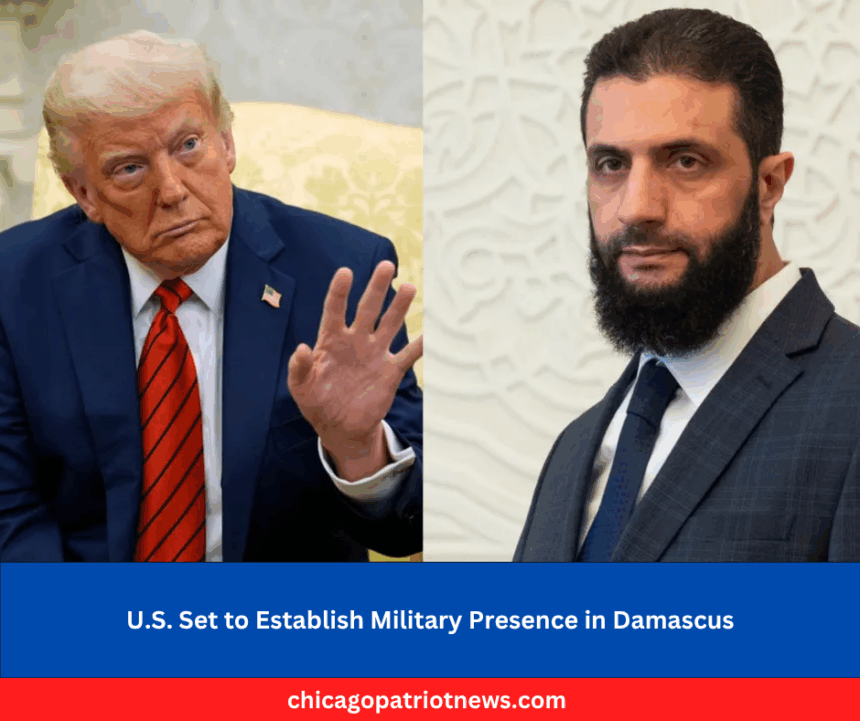
President Donald Trump is scheduled to meet President al-Sharaa at the White House on Monday. It will be the first time in modern history that a Syrian head of state visits Washington. The meeting is expected to build on ongoing discussions about Syria’s reintegration into the international community and its future relations with Israel.
The U.S. presence at the Damascus airbase mirrors other limited American deployments in the region. Similar posts already exist in Lebanon and Israel, where they oversee ceasefire agreements involving Hezbollah and Hamas. In northeastern Syria, U.S. forces continue to assist Kurdish-led groups in counterterrorism operations, although troop numbers were reduced earlier this year.
Syria’s state media agency SANA has denied reports of a new U.S. base, calling them inaccurate but acknowledging that “political, military, and economic coordination” between the two nations is growing. The Pentagon has declined to confirm the plans, citing security concerns, and stated that the U.S. continually reviews its military posture in Syria to support stability and combat extremist threats.
Diplomatic observers view the move as one of the most significant realignments in the Middle East in recent years. It comes as Washington pushes to secure an Israel–Syria non-aggression pact, an agreement that officials hope to finalize before the end of the year. If successful, the deal would represent a major shift in regional power structures and could redefine the role of both countries in post-war Syria.
For Syria, cooperation with the United States represents a dramatic transformation. After more than a decade of civil war and sanctions, the government in Damascus is seeking legitimacy and economic recovery. For Washington, the move offers a chance to stabilize a volatile region and curb the influence of Iran and Russia in the heart of the Levant.