
Chicago – November 20, 2025
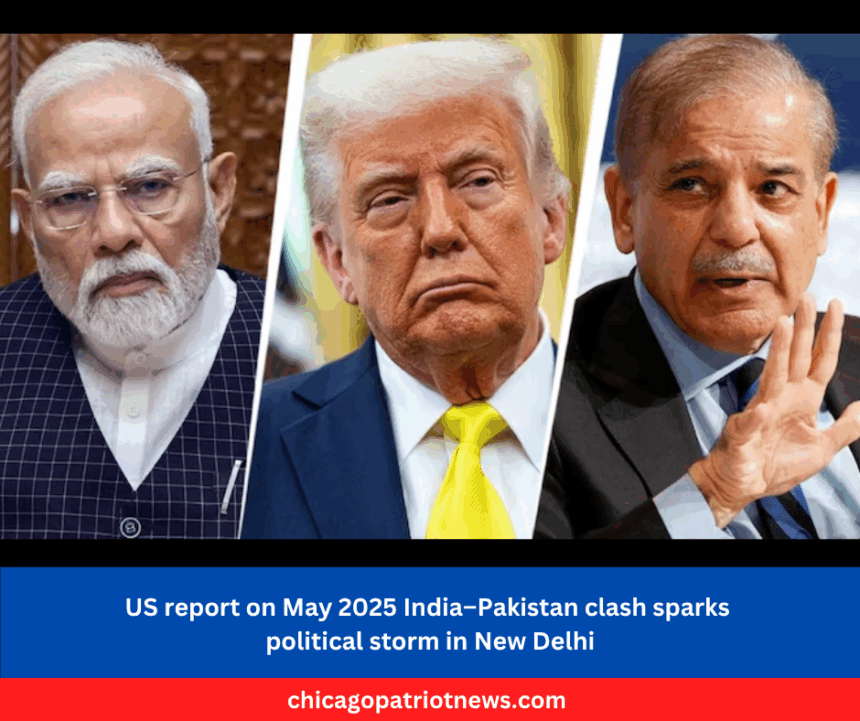
A new report submitted to the US Congress has ignited a major controversy in India after a Washington commission claimed that Pakistan “succeeded militarily” during the four-day conflict that followed the Pahalgam attack earlier this year.
The findings come from the US–China Economic and Security Review Commission, which analysed China’s strategic behaviour and said Beijing used the crisis to showcase its military systems. The report describes the clash as the most intense India and Pakistan have engaged in for half a century, and frames India’s response as retaliation to what it calls a “deadly insurgent attack” in Jammu and Kashmir — a characterisation that directly contradicts India’s description of the Pahalgam killings as a terror strike orchestrated from Pakistan.
The assertion that Pakistan gained an upper hand has been met with sharp criticism from the Opposition. Congress leader Jairam Ramesh called the document a “severe setback” for India’s diplomacy and questioned why the government has not protested its language. He said the report undermines India’s counter-terror narrative and repeats claims amplified recently by US President Donald Trump, who has said repeatedly that he forced both sides into a ceasefire by threatening crippling tariffs on New Delhi and Islamabad.
The report also highlights the role of Chinese weaponry, saying the clash became a live demonstration of Beijing’s air-defence systems, missiles and fighter jets supplied to Pakistan. According to the commission, Pakistan relied heavily on Chinese intelligence and hardware, a claim Islamabad denies and Beijing has neither confirmed nor rejected. Chinese embassies later praised the performance of their systems, using the episode to promote future defence sales.
India maintains that Operation Sindoor, its retaliatory precision strikes inside Pakistan and Pakistan-occupied Kashmir, demonstrated its own military capabilities. Prime Minister Narendra Modi has repeatedly said Pakistan was “brought to its knees within hours”, a stance now seemingly challenged by the US commission’s language.
The controversy has deepened political debate at home. Critics say the terminology used in the report — particularly the framing of the Pahalgam killings as an insurgent incident — undermines India’s long-held position on cross-border terrorism. Others argue that Trump’s repeated retelling of his role, combined with this US report, could complicate New Delhi’s diplomatic messaging at a sensitive time.
For now, the Ministry of External Affairs has not commented publicly on whether it will lodge a formal protest. Opposition leaders say silence would risk allowing a foreign body’s interpretation of the conflict to overshadow India’s version of events. Supporters of the government insist the report misreads ground realities and that India’s strategic posture remains unchanged.
As both countries quietly move past the May escalation, the dispute over how the conflict is documented — and who gets to define its narrative — is emerging as a new front in India’s political and diplomatic arena.