

Chicago – June 10, 2025
According to a new report by the United Nations Population Fund (UNFPA), the UN agency for reproductive rights, Namrata’s situation is becoming a global norm.
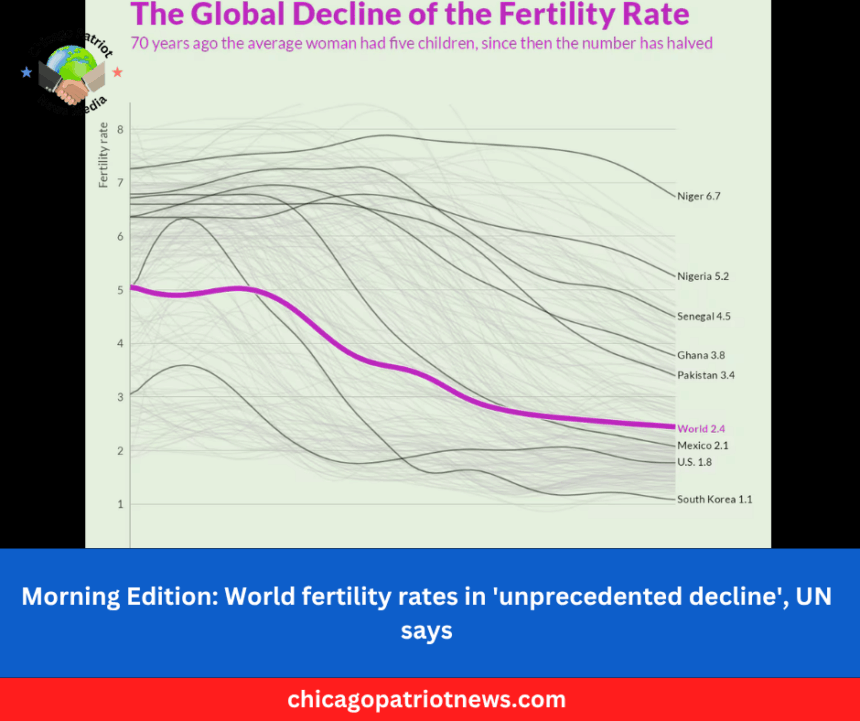
The agency has taken its strongest line yet on fertility decline, warning that hundreds of millions of people are not able to have the number of children they want, citing the prohibitive cost of parenthood and the lack of a suitable partner as some of the reasons.
UNFPA surveyed 14,000 people in 14 countries about their fertility intentions. One in five said they haven’t had or expect they won’t have their desired number of children.
The countries surveyed – South Korea, Thailand, Italy, Hungary, Germany, Sweden, Brazil, Mexico, US, India, Indonesia, Morocco, South Africa, and Nigeria – account for a third of the global population.
They are a mix of low, middle and high-income countries and those with low and high fertility. UNFPA surveyed young adults and those past their reproductive years.
“The world has begun an unprecedented decline in fertility rates,” says Dr Natalia Kanem, head of UNFPA.
“Most people surveyed want two or more children. Fertility rates are falling in large part because many feel unable to create the families they want. And that is the real crisis,” she says.
“We are seeing low fertility, population ageing, population stagnation used as an excuse to implement nationalist, anti-migrant policies and gender conservative policies,” he says.
UNFPA found an even bigger barrier to children than finances was a lack of time. For Namrata in Mumbai that rings true.