

Chicago – January 16, 2026
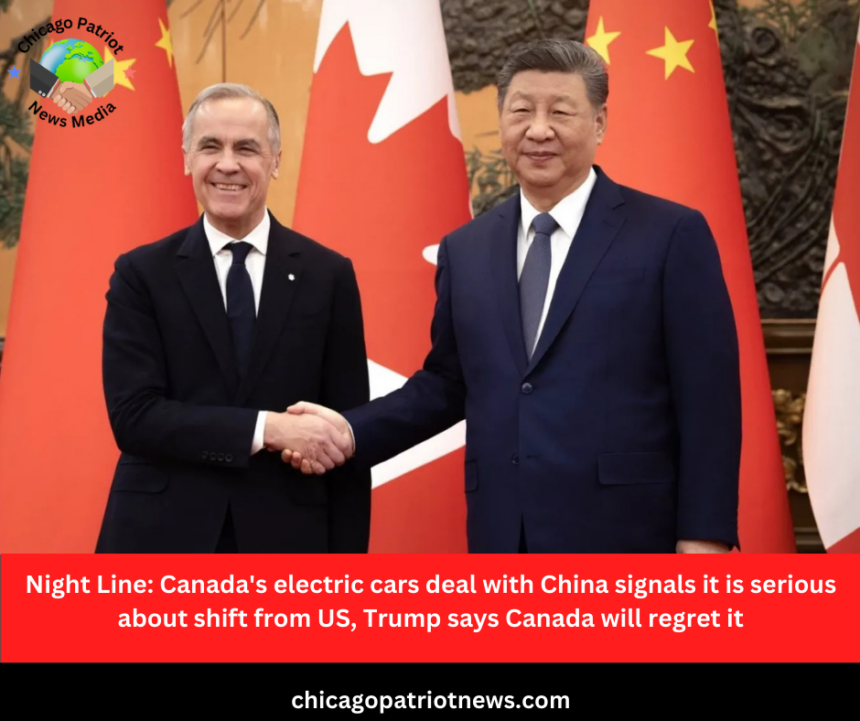
Canadian Prime Minister Mark Carney announced a preliminary trade agreement with China on January 16, 2026, slashing tariffs on up to 49,000 Chinese electric vehicles (EVs) annually from 100% to 6.1%, with potential increases to 70,000 over five years. In exchange, China will reduce duties on Canadian agricultural products like canola, marking a thaw after years of strained relations.
US officials sharply criticized the move. Transportation Secretary Sean Duffy warned Canada would “reflect on this decision and undoubtedly wish they hadn’t allowed Chinese vehicles into their market,” citing barriers preventing Chinese EVs from entering the US. US Trade Representative Jamieson Greer called it “problematic,” emphasizing protections for American auto workers.
The deal reverses Canada’s 2024 alignment with US tariffs on Chinese EVs, accused of subsidies distorting competition. Analysts predict Chinese firms could claim 10% of Canada’s EV market, pressuring US players like Tesla. President Trump offered mixed signals, calling it potentially positive while administration voices raised alarms ahead of the July CUSMA review.
Carney hailed Chinese EVs as cost-effective and efficient, hoping to attract investments in Canada’s auto sector. Auto industry leaders seek clarity, fearing impacts on North American supply chains.