

Chicago – March 10, 2026
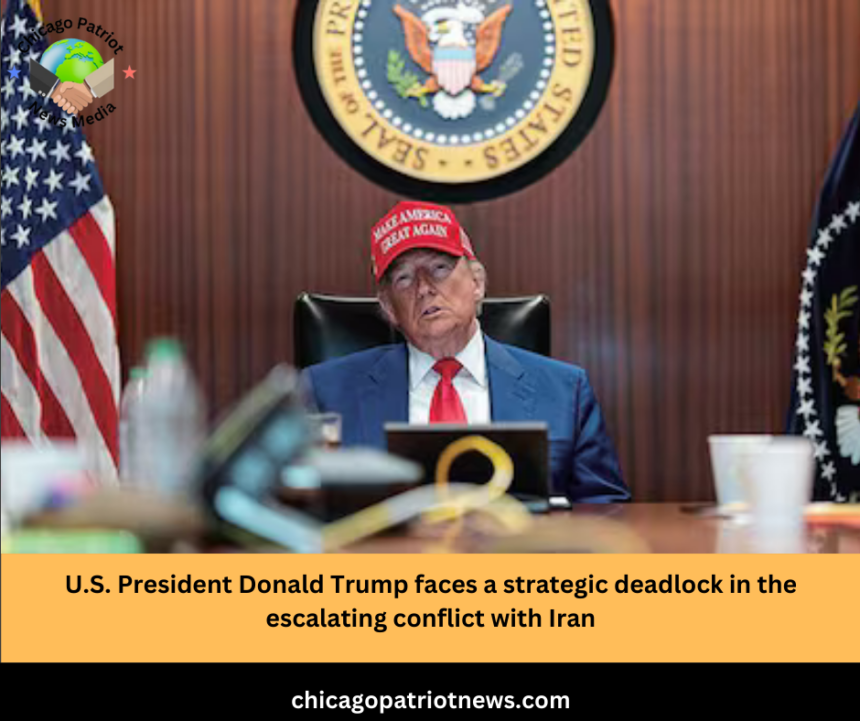
Analysts warn that U.S. President Donald Trump faces a strategic deadlock in the escalating conflict with Iran, with three potential paths — each carrying significant risks.
1. Limited Victory and Withdrawal
U.S. officials have framed the campaign as a decisive blow to Iran’s military capabilities and nuclear ambitions. However, experts caution that striking infrastructure or leadership does not guarantee a strategic “defeat.” Iran, with its vast territory, entrenched missile systems, and embedded militia networks, can absorb damage and continue asymmetric attacks. The economic impact is already being felt: oil and gas prices have surged due to disruptions in and around the Strait of Hormuz, a key route for roughly 20% of the world’s petroleum trade, adding inflationary pressures globally.
2. Ground Invasion and Protracted War
Some U.S. commentators and military planners have suggested sending ground forces into Iran. Tehran’s geography — roughly the size of Alaska, with rugged mountain ranges and dense urban centers — makes a quick or clean occupation highly challenging. Iran’s military doctrine emphasizes defense in depth, militia integration, and asymmetric warfare. Any ground intervention could result in a costly, prolonged conflict with uncertain outcomes.
3. Escalation to Regional or Nuclear Confrontation
While unlikely, escalation toward nuclear use would carry catastrophic humanitarian and geopolitical consequences. International condemnation would be swift, and key powers such as Russia, China, and Pakistan could escalate their own defense postures or support regional partners, further widening the conflict.
Strategic and Political Backlash
Domestically, public opinion shows growing skepticism over the war’s objectives and costs in lives and resources. Rising fuel prices, supply chain disruptions, and sustained military casualties complicate the White House’s messaging. Regionally, several Gulf allies have expressed frustration over a lack of coordination ahead of Iranian retaliatory strikes targeting airspace and infrastructure.
Nuclear Ambitions and Technological Shifts
Iran’s nuclear program remains resilient despite previous strikes. Its growing use of China’s BeiDou satellite system, as an alternative to U.S.-controlled GPS, enhances targeting precision and complicates U.S. military planning, creating new asymmetries on the battlefield.