
Chicago – May 11, 2025
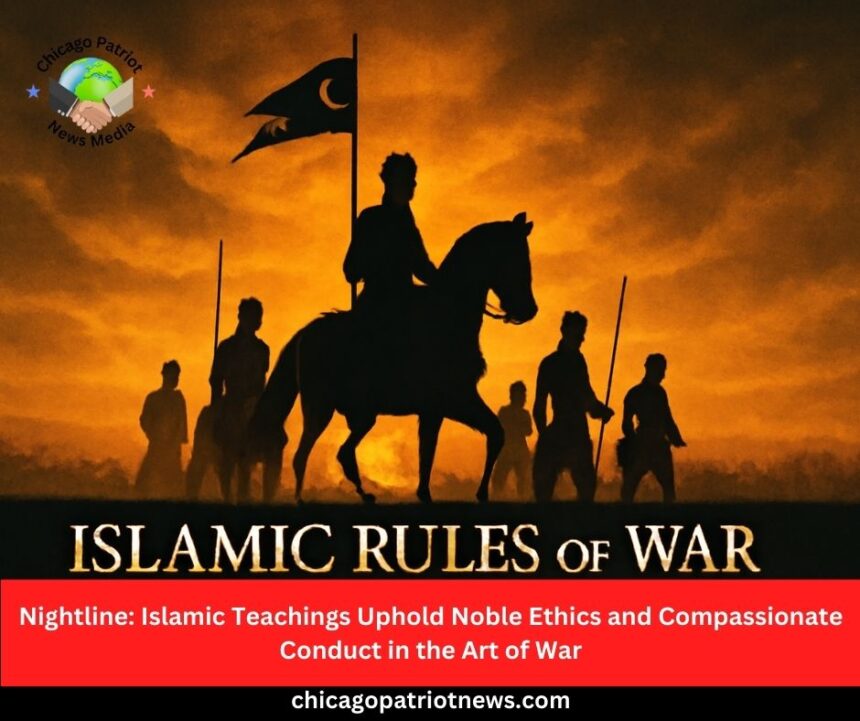
Islamic rules of war, deeply rooted in the Qur’an and the Sunnah of Prophet Muhammad (PBUH), emphasize strict ethical conduct during armed conflict, particularly regarding the protection of non-combatants such as women, children, and civilians, as well as the preservation of food and property. These principles are highly relevant in the context of the Pakistan-India conflict, advocating for humane warfare aligned with Islamic teachings.
Protection of Women and Children
Islam strictly prohibits targeting women and children during war. The Prophet Muhammad (PBUH) explicitly forbade aggression against women, commanding their protection and honoring female captives with justice and dignity. Women are exempt from combat roles and are instead supported in non-combat functions like tending to the wounded. The preservation of women’s honor and dignity is paramount, and any violation is condemned85. Similarly, children are regarded as vulnerable civilians who must not be harmed, reflecting the Islamic mandate to safeguard future generations.
Preservation of Produce and Food
Islamic law forbids the destruction of crops, fruit-bearing trees, and food supplies unless absolutely necessary for military survival. Deliberate destruction of enemy property without military necessity is considered a grave sin termed fasad-fil-arz (disorder on earth). The Prophet’s companions were instructed not to kill livestock except for food and to avoid burning or drowning palm trees. This rule ensures that war does not lead to unnecessary famine or long-term suffering of civilians.
Restrictions on Warfare Tactics
Nighttime attacks and indiscriminate methods of warfare are discouraged in Islam. The Qur’an and Sunnah advocate fighting only those who engage in combat and prohibit harming those who seek protection or are non-combatants3. The use of human shields and attacks that cannot distinguish military targets from civilians are forbidden. Islamic law aligns closely with modern International Humanitarian Law in these respects, emphasizing proportionality and distinction.
Ethical Conduct and Human Dignity
The dignity of all humans, even enemies, must be preserved. Mutilation of bodies, unnecessary brutality, and looting are prohibited. The Prophet’s example includes forbidding slapping faces during combat and cursing those who mistreat animals. These ethical standards promote a just and humane approach to warfare.
In the Pakistan-India context, adherence to these Islamic rules of war could foster restraint, reduce civilian suffering, and uphold human dignity amid conflict. Islam’s comprehensive framework for war emphasizes justice, mercy, and respect for life, offering a moral compass that transcends enmity and violence.