
Chicago – May 15, 2025
On Thursday, Palestinians observed Nakba Day, a day of remembrance for the loss of their land after the 1948 war, which marked the creation of the state of Israel. The Nakba, meaning “catastrophe,” has been a significant part of Palestinian history for over 75 years and continues to shape their national identity and their complex relationship with Israel.
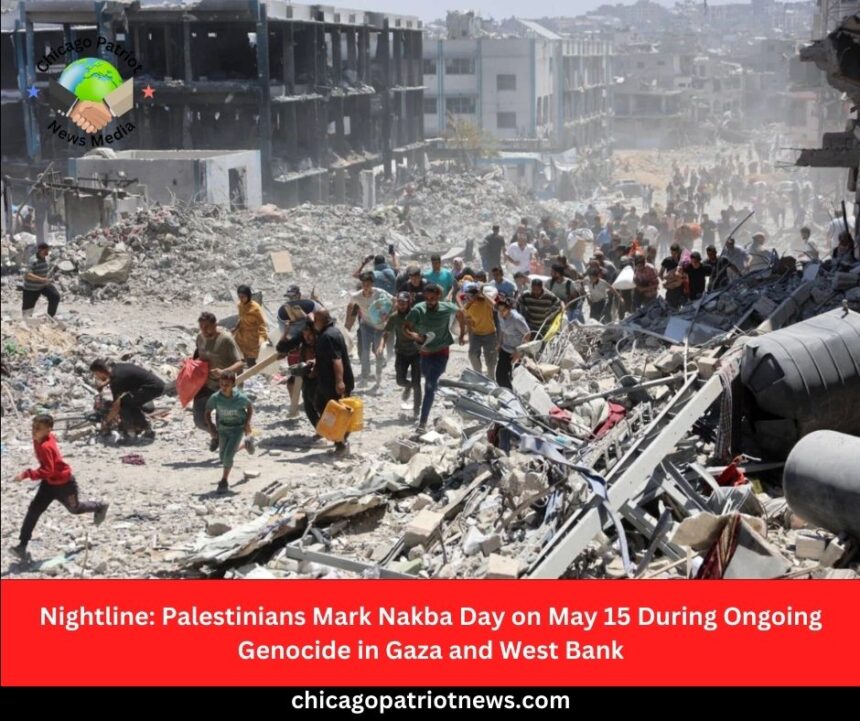
The memory of the Nakba has been heightened by the ongoing war in Gaza and the Israeli military’s operations in the West Bank. These conflicts have caused widespread displacement, with hundreds of thousands of Palestinians, including descendants of those who lost their homes in 1948, being forced to move again.
In Gaza, the war has destroyed large parts of the area, forcing over 2 million residents to repeatedly move, often living in tents, damaged houses, or makeshift shelters. Nakba Day, held on May 15, marks the beginning of the 1948 war when neighboring Arab states attacked Israel after it declared independence. This war lasted months, resulting in the displacement of over 700,000 Palestinians, many of whom ended up in refugee camps, similar to the conditions in Gaza today.
The ongoing conflict in Gaza, which began in response to the Hamas attack on southern Israel in October 2023, has been one of the bloodiest in Israel’s history. The UN estimates that 70% of Gaza is now considered dangerous, with many areas either off-limits or under military orders to avoid. Since March, more than 436,000 people have been displaced in Gaza alone.
In the West Bank, Palestinians also face increasing challenges. Israeli settler violence and military actions in cities like Jenin and Tulkarm have forced tens of thousands of people to flee their homes.