
By using this site, you agree to the Privacy Policy and Terms of Use.
Accept
Chicago Patriot News MediaChicago Patriot News MediaChicago Patriot News Media
  • Advertise with us
  • Newsletters
  • Deal
Reading: Morning Edition: Hari Singh, the Maharaja of Kashmir and the history of Kashmir region.
Share
Font ResizerAa
Chicago Patriot News MediaChicago Patriot News Media
Font ResizerAa
  • Politics
  • Advertise with us
  • Newsletters
  • Deal
  • Advertise
© 2022 Foxiz News Network. Ruby Design Company. All Rights Reserved.
Chicago Patriot News Media > Blog > Uncategorized > Morning Edition: Hari Singh, the Maharaja of Kashmir and the history of Kashmir region.
Uncategorized

Morning Edition: Hari Singh, the Maharaja of Kashmir and the history of Kashmir region.

Mujeeb Osman
Last updated: May 3, 2025 2:05 pm
Mujeeb Osman 10 months ago
Share
SHARE

Chicago – May 03, 2025

Kashmir’s Accession and the Beginning of Conflict

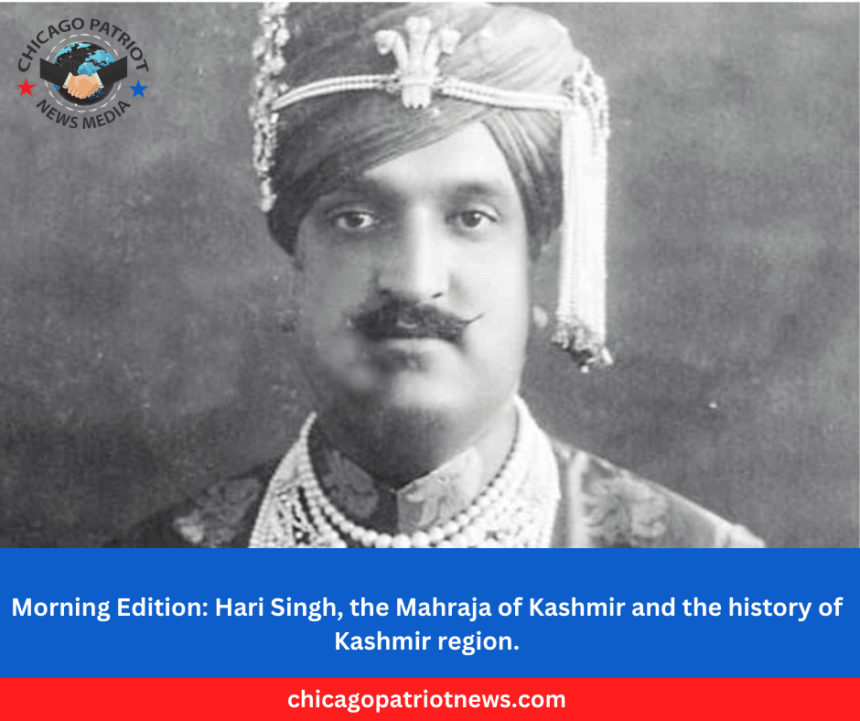
Hari Singh, the ruler of Kashmir, hoped that by delaying his decision during the 1947 partition of British India, he could keep Kashmir independent. However, unrest among his Muslim subjects in the west and an invasion by Pashtun tribesmen forced his hand. With British protection gone after their withdrawal from South Asia, Kashmir’s internal weaknesses were exposed. Under the rules of partition, princely states could choose to join either India or Pakistan, or attempt to remain independent. In October 1947, under pressure, Hari Singh signed an Instrument of Accession to India.

This decision triggered military action from both India and Pakistan, Pakistan believed Kashmir should naturally be part of its territory due to its Muslim majority and geographic ties, while India acted to support the accession. The fighting continued into 1948, ending with a UN-brokered ceasefire in January 1949. In July of that year, both nations agreed on a ceasefire line, which later became known as the Line of Control under the 1972 Simla Agreement. Though intended as a temporary solution, the division still remains. Most of Kashmir’s Muslim population lived in the Vale of Kashmir, now under Indian control, while Pakistan held sparsely populated, less developed areas.

Ongoing Tensions and Efforts Toward Peace

Over the years, many efforts were made to resolve the Kashmir issue, but tensions kept rising. A major turning point came in 1962 when China invaded Ladakh, increasing anxiety in the region. In 1965, India and Pakistan went to war again, ending in a ceasefire and the Tashkent Agreement in 1966 to seek peace. Conflict flared up again in 1971, leading to the creation of Bangladesh. This war ended with the Simla Agreement in 1972, which confirmed the Line of Control and expressed hope for peaceful relations. Though some believed Pakistani leader Zulfikar Ali Bhutto informally accepted the Line of Control as a border, he later denied it. After his arrest in 1977 and execution in 1979, tensions over Kashmir reignited.

Since the late 1980s, several groups have called for Kashmir’s independence or union with Pakistan. To manage these separatist movements and face threats along the Line of Control, India has kept a strong military presence in the region. This military force also supported the unity of Jammu and Kashmir, especially as some groups in Buddhist-majority Ladakh pushed for separate status, which they eventually received in 2019.

You Might Also Like

Morning Edition: Justice Department Posts 3 FBI Memos Alleging Unverified Sexual Abuse by Donald Trump

Morning Edition: Congresswoman Whip Clark opposes Trump Administration Strikes on Iran

Morning Edition: Why India switched sides on Israel-Palestine — and why it matters

Morning Edition : Iran Protests Fade After Deadly Crackdown as U.S. and Allies Weigh Sanctions.

Morning Edition: Trump withdraws US from key climate treaty, deepening global pullback

Share This Article
Facebook Twitter Email Print
By Mujeeb Osman
With 26 years of journalism experience across Urdu and English newspapers, he has built a reputation for thoughtful, community-focused reporting. Mujeeb Osman previously served as the Chicago in-charge of The Muslim Observer, where he covered local, national, and international issues impacting diverse communities. At Chicago Patriot News, he continues his commitment to delivering accurate, balanced, and compelling stories. His work reflects a deep interest in immigration issues, public policy, and American politics, areas he has followed closely throughout his career. At Chicago Patriot News, he continues his commitment to delivering accurate, balanced, and compelling stories that illuminate the challenges and perspectives shaping today’s public discourse.
Previous Article Morning Edition: Tensions Rise: US Urges India and Pakistan to Avoid Conflict
Next Article Nightline: Beyoncé’s Cowboy Carter Tour Takes Off in LA with Dazzling Show and Blue Ivy Cameo

Our Mission

Search CPN

Latest News

  • Morning Edition: Pam Bondi Remains U.S. Attorney General Amid Ongoing Scrutiny
  • Morning Edition: Trump looks to turn attention to Western Hemisphere at Americas summit
  • Night Line: Trump grants India 30-Day permission to buy Russian oil; Russia says no discount
  • Night Line: Iran President Pezeshkian Apologizes for Strikes on Neighbors Amid Escalating Regional Conflict
  • Night Line: Trump Hosts ‘Shield of Americas’ Summit with 12 Latin Leaders
  • Morning Edition: Justice Department Posts 3 FBI Memos Alleging Unverified Sexual Abuse by Donald Trump

Disclaimer

Chicago Patriot News MediaChicago Patriot News Media
Follow US
© 2025 CPN. All Rights Reserved by Chicagopatriotnews.com
Welcome Back!

Sign in to your account

Register Lost your password?
