

Chicago – Tuesday, May 13, 2025
Modi Warns of Strong Response to Future Attacks
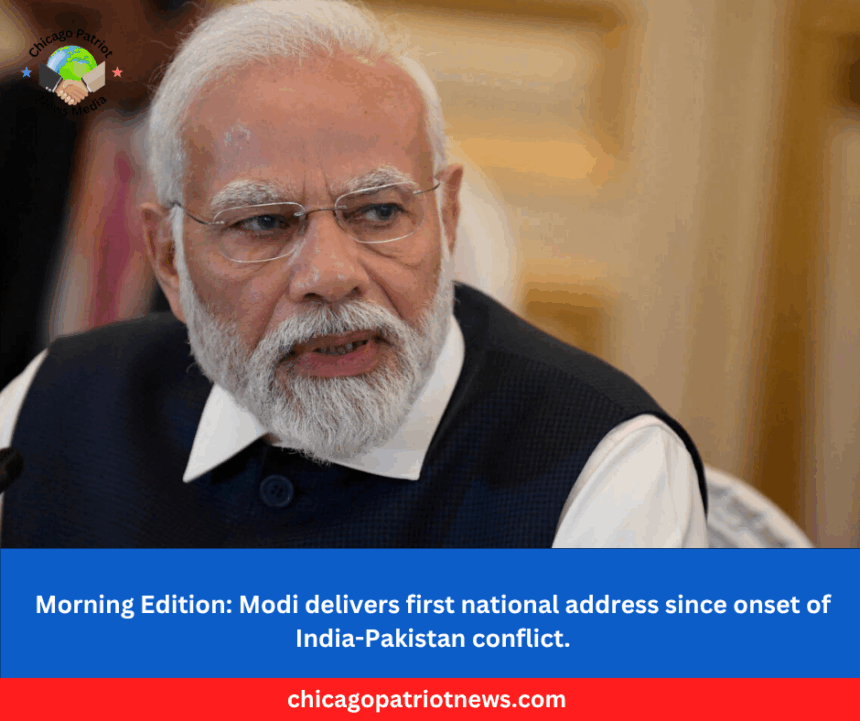
In his first public address since the outbreak of hostilities with Pakistan, Indian Prime Minister Narendra Modi warned that any future terrorist attack on India would trigger a forceful retaliation. “This is not a time for war, but neither is it a time for terror,” Modi said, following four days of military conflict involving shelling and air raids. The clashes began after a militant attack in Indian-administered Kashmir killed 26 people—an act India blamed on a Pakistan-based group. Pakistan denied any involvement.
Modi emphasized that India would not engage in trade talks under the threat of terrorism, echoing recent remarks by U.S. President Donald Trump, who indicated that trade with both nations depends on conflict resolution. Modi also referenced a suspended water-sharing agreement, stating, “Water and blood cannot flow together.”
Ceasefire Holds, But Tensions Remain High
A U.S.-mediated ceasefire was announced over the weekend and has largely held, according to officials from both India and Pakistan. Military leaders from both sides met on Monday to discuss de-escalation and agreed to avoid further aggression. They also committed to measures that would reduce troop presence near the borders.
India has since reopened 32 civilian airports that had been shut due to safety concerns. However, both sides remain cautious, with high alertness at military posts and ongoing distrust over ceasefire commitments.
Escalation Threatened Wider War
The recent clashes were the latest in the long-standing conflict over Kashmir, a region both countries claim. The violence reached alarming levels, with both nations reporting strikes on each other’s military targets and heavy casualties. India claimed it destroyed multiple Pakistani air bases and militant camps, while Pakistan asserted that it targeted over two dozen Indian military installations and claimed to have downed several Indian jets, claims India has not confirmed.
Each side reported losses, both military and civilian, and declared military success following the ceasefire. While tensions appear to be easing, the scale of recent exchanges underscores the fragile nature of peace between the two nuclear-armed neighbors.