
Chicago, Thursday May 22, 2025
From Crisis to “Relief”: How a Drastic Tariff Cut Still Feels Like Pressure
Yair Reiner, who runs Gowanus Kitchen Lab in Brooklyn, manufactures a stovetop splatter guard called the Frywall in China. When former President Trump imposed steep 145% tariffs on Chinese imports, Reiner feared for the survival of his business.
“It felt like someone had their boot on my neck, I couldn’t breathe, and I had no idea what to do next,” Reiner recalled.
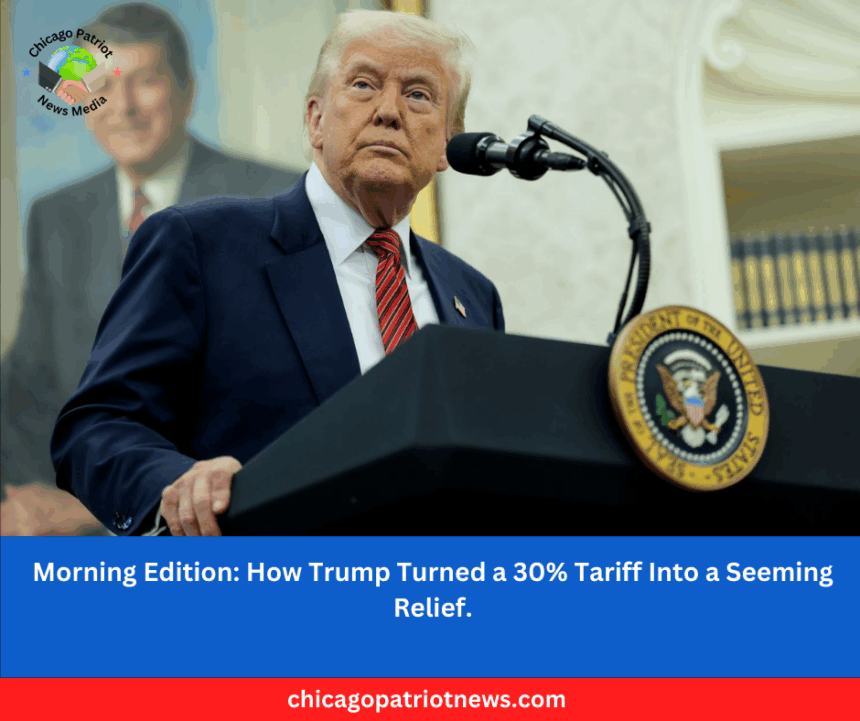
Though Trump recently reduced the tariff to 30%, Reiner says the pressure hasn’t fully lifted. “The boot’s still there,” he said. “There’s less pressure, but I’m still struggling to figure out what to do.” Before the trade war, Reiner paid only 3% to 4% in tariffs, so even the new 30% rate is still significantly high. However, the dramatic reduction from 145% made it feel almost like a reprieve a reflection of how extreme the tariff changes have become under Trump.
Trump’s Tariff Strategy: High Drama, Partial Rollbacks, and Long-Term Impact
This scenario follows a familiar pattern in Trump’s tariff policy: announce extreme rates, then scale them back, but still leave lasting, higher-than-before tariffs.
For instance, on April 2, 2025, Trump introduced sweeping tariffs affecting almost every country, with some rates set sky-high. Just a week later, he revised many of them, lowering most to around 10%. Yet even with the reduction, the tariffs marked a significant increase compared to the pre-Trump era. Marcus Noland of the Peterson Institute for International Economics said Trump’s so-called “Liberation Day” tariffs initially pushed the U.S. to “catastrophic levels,” only to settle at rates not seen since the 1940s. Today, the average U.S. tariff rate stands at nearly 18%, the highest since 1934, a stark contrast to the much lower rates of recent decades. Despite the rollback, Noland warns that the market perception of a return to normal is misleading. “Tariffs are still far higher now than when Trump first took office,” he said.