

Chicago – July 27, 2025
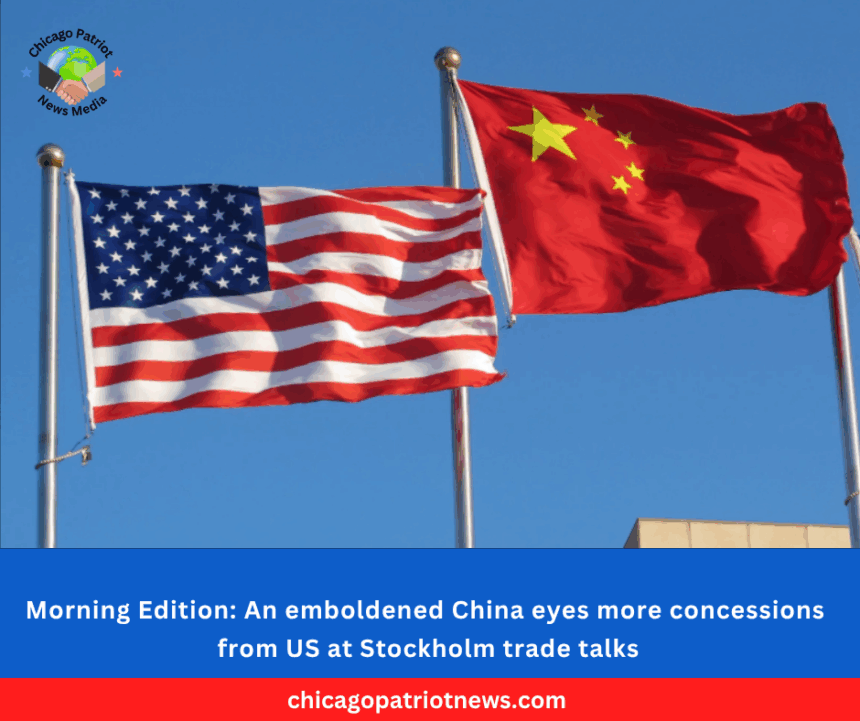
For the third time in as many months, US and Chinese officials will meet in Europe for trade talks — and this time, Beijing is arriving at the negotiating table more emboldened than ever.
Its firm grip on strategic minerals has compelled the Trump administration to roll back some export curbs on China, including a stunning reversal of the ban on sales of a key Nvidia AI chip.
Meanwhile, the Chinese economy has delivered better-than-expected growth months into the trade war, according to government data, posting a record trade surplus that underscores the resilience of its exports as they pivot away from the US market.
And just a few days ago, Beijing reinforced its tough posture at a key summit with the European Union, offering little to address the bloc’s concerns spanning from trade imbalances to the Ukraine war.
When a new round of talks begins in Stockholm on Monday, Chinese negotiators led by Vice Premier He Lifeng are expected to greet their American counterparts with fresh confidence in Beijing’s uncompromising, hard-edged approach – and a growing appetite for further US concessions.
Treasury Secretary Scott Bessent, who’s leading the US delegation, said before the talks in the Swedish capital that the two sides would be working out a “likely” extension of their trade truce, which currently expires on August 12.
The 90-day reprieve, struck at a May meeting in Geneva, held back three-digit tariffs imposed in April that threatened to cut off trade between the world’s two biggest economies. The truce was pulled back from the brink of collapse with further talks in London in June, after each side accused the other of reneging on its promises.
And now, the Stockholm talks may offer clues as to how much longer that detente can hold – and whether the two countries can further bring down remaining tariffs and address other thorny issues, such as tech restrictions, as they work toward a lasting deal.
The latest round of negotiations follows Donald Trump’s recent flurry of trade deals with the United Kingdom, Japan, and other trade partners, part of the global tariff war he launched earlier this year.
But the US President appears to have dialed down his confrontational approach on China, and has spoken enthusiastically about visiting the country at the invitation of its leader Xi Jinping in the “not too distant future.”