
Chicago – September 07, 2025
Where is Kashmir and Why Does It Matter?
Kashmir lies in northern South Asia, bordering India, Pakistan, and China. Its strategic location, rich water resources, and cultural diversity make it geopolitically crucial. It’s also a volatile fault line where conflicts can escalate into regional or global crises.
A Brief History: Partition, Accession, and Abrogation
After partition in 1947, Kashmir’s accession to India sparked wars with Pakistan. Promises of a UN plebiscite remain unfulfilled. In 2019, India revoked Kashmir’s autonomy under Articles 370 and 35A, tightening central control. For Kashmiris, this represented the loss of their last political and cultural rights.
The Myth of “Normalcy” Versus Reality
India promotes an image of normalcy in Kashmir, but the ground reality is marked by internet blackouts, lockdowns, and restricted freedoms. These measures silence dissent and fracture communities.
The Militarized Valley
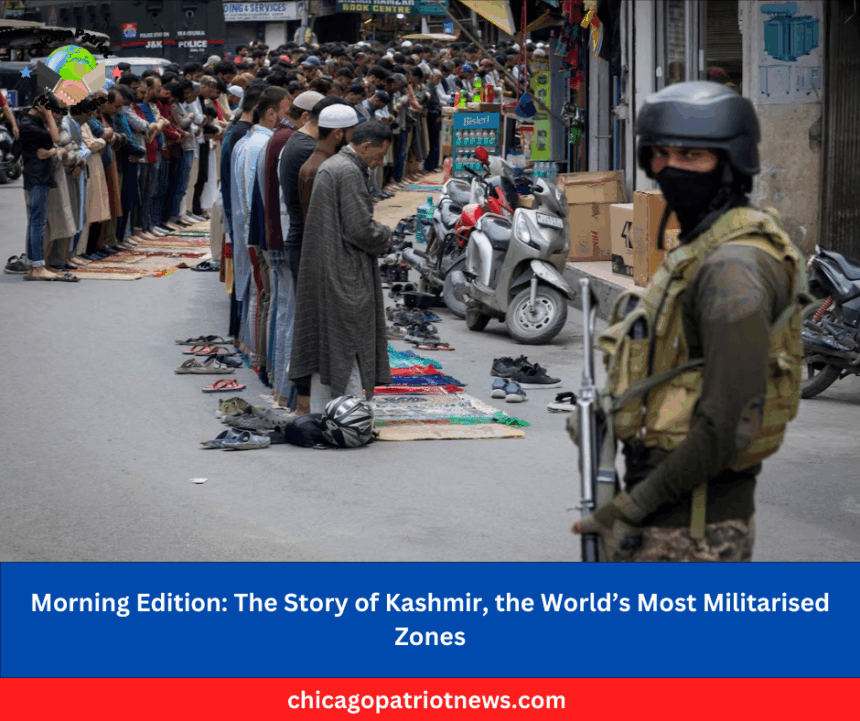
Kashmir hosts 500,000–700,000 Indian troops, making it one of the world’s most militarized regions. Civilian detentions, killings, and fear are widespread. Laws like PSA and UAPA allow imprisonment without trial. Cultural identity is under threat due to demographic changes, language erosion, and cultural co-option.
Why It Matters Globally
The Kashmir conflict raises global stakes on justice, sovereignty, and human rights. With nuclear-armed India and Pakistan at odds, the risk of escalation is high, making Kashmir a key international security issue.
The Story of Kashmir
Kashmir symbolizes resistance against repression and the global struggle for justice and dignity. Its plight is not just local but part of the larger fight for human rights worldwide.