
Chicago – December 06, 2025
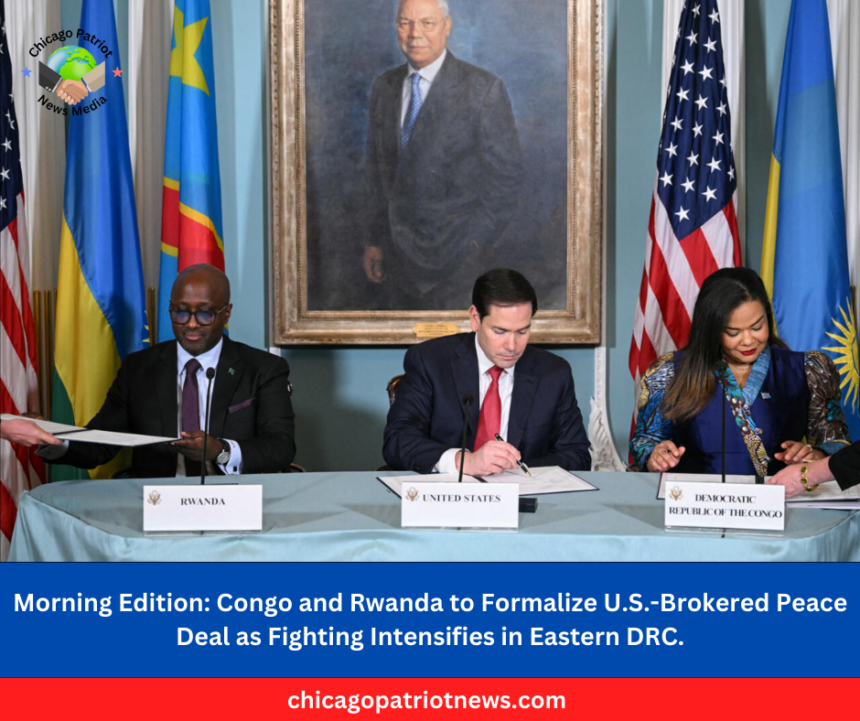
The Democratic Republic of Congo and Rwanda are preparing to officially reaffirm a U.S.-brokered peace agreement Thursday in Washington, during a high-profile ceremony at the recently renamed Donald J. Trump Institute for Peace. Congolese President Félix Tshisekedi and Rwandan President Paul Kagame are expected to attend, marking a significant diplomatic moment after years of tension.
While the Trump administration views the event as a major step toward ending decades of conflict in eastern Congo, violence on the ground tells a different story. Fighting between Congolese troops and the Rwanda-backed M23 rebel movement has escalated sharply, with particularly intense clashes near the border town of Kamanyola this week.
The D.C. ceremony is considered largely ceremonial. Congo and Rwanda already signed the peace accord on June 27 after their relations nearly collapsed into full-scale war earlier this year. In January, M23 fighters supported by thousands of Rwandan soldiers seized the two largest cities in eastern Congo, prompting urgent international intervention.
President Trump hailed the June agreement as “a glorious triumph” and has repeatedly claimed credit for ending more than 30 years of conflict in the mineral-rich region.
According to the deal, Rwanda is required to pull its troops from Congolese territory and end all support for the M23, a rebel group led primarily by Tutsi commanders from Congo’s minority communities. In return, Congo must dismantle the Democratic Forces for the Liberation of Rwanda (FDLR), a Hutu militia formed by extremists who fled Rwanda after the 1994 genocide that killed around 800,000 Tutsis.
However, neither government has fulfilled its obligations. Rwandan troops remain active in Congo, and the FDLR continues to operate across the east. Despite this, leaders from both nations maintain that they are committed to long-term peace.
“This peace accord will, I hope, bring real peace true peace to our countries,” Tshisekedi told supporters last week. He emphasized that peace requires a complete withdrawal of Rwandan forces from Congolese soil.
The situation remains complicated, as the success of the U.S.-brokered deal also relies on separate negotiations between Congo’s government and the M23 rebels. Those talks have stalled, raising further concerns about the agreement’s viability.
As regional tensions grow and fighting continues, the world will be watching Thursday’s ceremony closely hoping that symbolism might eventually translate into lasting stability for the eastern Democratic Republic of Congo.