

Chicago – December 13, 2025
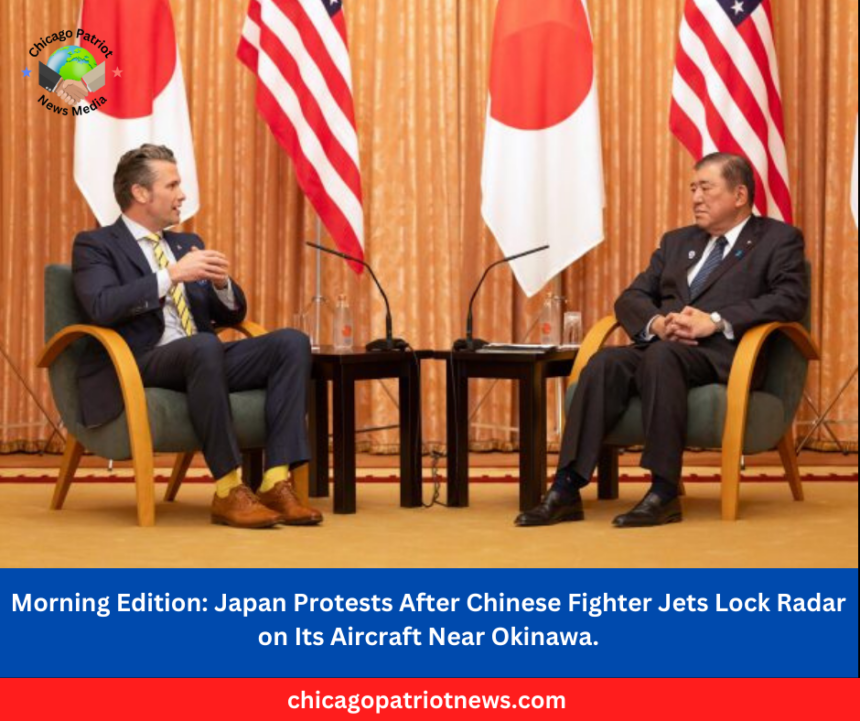
Japan has lodged a strong diplomatic protest against China after Chinese fighter jets reportedly locked radar systems onto Japanese military aircraft, escalating already strained relations between the two regional powers.
Japanese officials confirmed that the incidents occurred on Saturday near the country’s southern Okinawa islands. Radar lock-ons are widely viewed as a serious military threat, as they can indicate preparation for a potential strike. According to Tokyo, there were two separate radar targeting events involving Chinese J-15 fighter jets.
In response, Japan scrambled its own fighter aircraft to monitor the situation. Chinese authorities, however, rejected Japan’s claims, accusing Tokyo of interfering with a previously announced military training exercise and harassing Chinese forces. No injuries or physical damage were reported.
Tensions between the two nations have intensified over the past month, particularly after Japanese Prime Minister Sanae Takaichi suggested that Japan could consider military action should China launch an attack on Taiwan. Beijing regards the self-governed island as part of its territory and has repeatedly stated it may use force to assert control.
Since then, both governments have exchanged sharp rhetoric, with diplomatic strains beginning to affect everyday life in both countries. Last week, China and Japan’s coast guards offered conflicting versions of a confrontation near disputed islands in the East China Sea.
A Japanese defense ministry official said the intent behind the Chinese jets’ actions was “unclear,” but stressed that radar lock-ons were unnecessary if the purpose was merely to track other aircraft. The J-15 jets, launched from China’s Liaoning aircraft carrier, reportedly targeted Japanese planes at 4:32 p.m. local time and again just after 6:30 p.m.
Japanese officials emphasized that their aircraft did nothing that could be interpreted as provocative. Speaking to reporters on Sunday in Ishikawa prefecture, Prime Minister Takaichi described the incident as “extremely regrettable” and said Japan had formally demanded assurances to prevent a repeat.
China’s navy dismissed Japan’s protest, calling the accusations inconsistent with facts and urging Tokyo to stop what it described as “slander and smearing.” Beijing reiterated that its naval drills in the area had been publicly announced in advance.
The latest incident follows another episode two weeks ago, when Japan scrambled aircraft after detecting a suspected Chinese drone near Yonaguni Island, close to Taiwan. Tokyo has since announced plans to deploy missiles on the island, a move that has drawn sharp criticism from Beijing.
Amid the escalating tensions, China has advised its citizens against traveling to Japan. Beijing has also suspended seafood imports from Japan and halted the screening of several popular Japanese films.