

Chicago – February 26, 2026
An unstable Afghanistan has historically created conditions that benefit certain state and non-state actors, while significantly harming the country’s population and long-term development. Weak central governance and fragmented authority structures can produce power vacuums that external and internal actors seek to exploit.
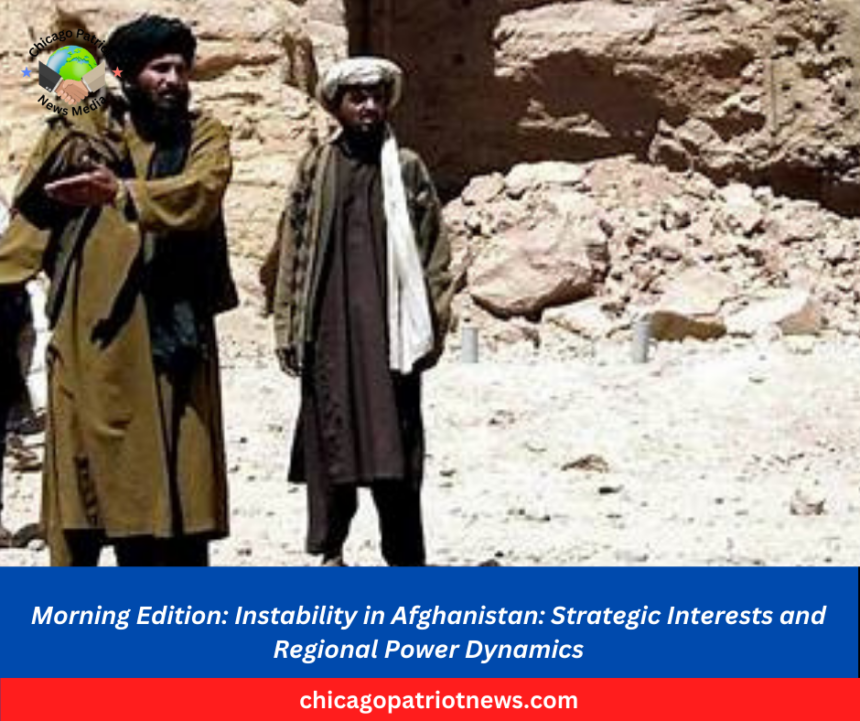
Militant organizations such as the Taliban may benefit from instability by expanding territorial control and consolidating political influence. Armed groups often capitalize on weakened institutions to strengthen recruitment, financing, and operational capacity.
Regional powers have also pursued strategic interests in Afghanistan. Pakistan has historically viewed developments there through the lens of regional security competition, particularly in relation to India. Major powers including the United States, China, and Russia have engaged with Afghanistan in ways shaped by counterterrorism concerns, geopolitical influence, and regional stability calculations.
While instability may provide short-term strategic leverage for some actors, it has consistently resulted in economic disruption, displacement, weakened institutions, and humanitarian crises for Afghan civilians. The broader consequence is prolonged insecurity and hindered state-building.