

Chicago – July 14, 2026
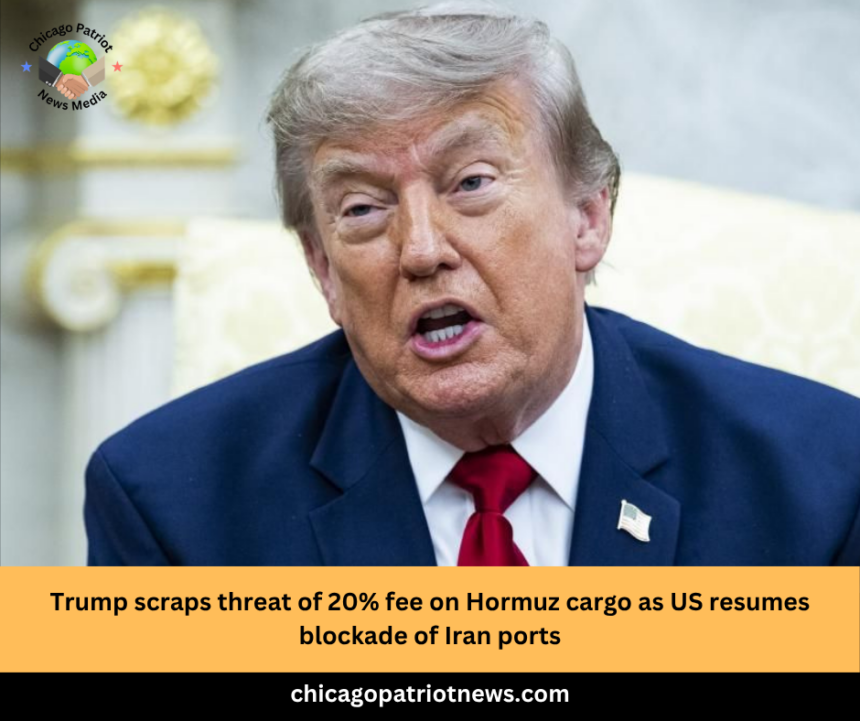
The United States has reinstated a blockade targeting key Iranian port operations, signaling a renewed effort to curb Tehran’s maritime trade and regional influence. The move comes amid heightened tensions in the Gulf, with U.S. officials citing security concerns and alleged violations of international sanctions by Iran.
Simultaneously, former President Donald Trump has withdrawn a previously proposed plan to impose transit fees on vessels passing through the Strait of Hormuz, one of the world’s most critical oil shipping routes. The proposal had faced widespread criticism from global shipping stakeholders and energy markets, who warned it could disrupt trade flows and escalate geopolitical risks.
Analysts suggest that while the port blockade increases economic pressure on Iran, the decision to abandon the Hormuz fee may be aimed at stabilizing international shipping costs and maintaining support from key allies. The Strait of Hormuz handles a significant portion of global oil exports, making any policy shift in the region highly consequential.
The dual developments reflect a complex balancing act between enforcing sanctions and avoiding broader disruptions to global commerce.