
Chicago – May 03, 2025
Kashmir’s Accession and the Beginning of Conflict
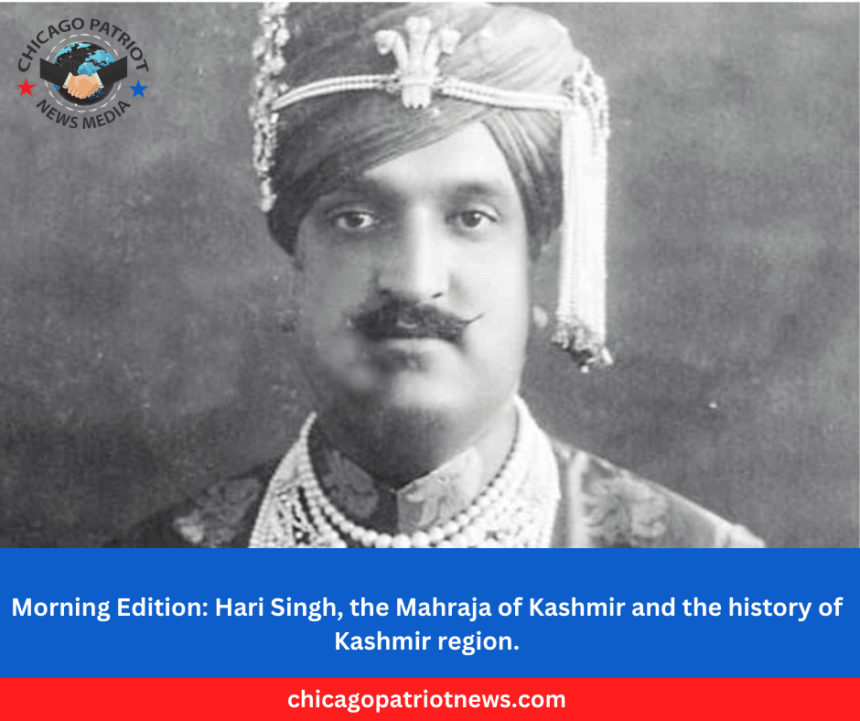
Hari Singh, the ruler of Kashmir, hoped that by delaying his decision during the 1947 partition of British India, he could keep Kashmir independent. However, unrest among his Muslim subjects in the west and an invasion by Pashtun tribesmen forced his hand. With British protection gone after their withdrawal from South Asia, Kashmir’s internal weaknesses were exposed. Under the rules of partition, princely states could choose to join either India or Pakistan, or attempt to remain independent. In October 1947, under pressure, Hari Singh signed an Instrument of Accession to India.
This decision triggered military action from both India and Pakistan, Pakistan believed Kashmir should naturally be part of its territory due to its Muslim majority and geographic ties, while India acted to support the accession. The fighting continued into 1948, ending with a UN-brokered ceasefire in January 1949. In July of that year, both nations agreed on a ceasefire line, which later became known as the Line of Control under the 1972 Simla Agreement. Though intended as a temporary solution, the division still remains. Most of Kashmir’s Muslim population lived in the Vale of Kashmir, now under Indian control, while Pakistan held sparsely populated, less developed areas.
Ongoing Tensions and Efforts Toward Peace
Over the years, many efforts were made to resolve the Kashmir issue, but tensions kept rising. A major turning point came in 1962 when China invaded Ladakh, increasing anxiety in the region. In 1965, India and Pakistan went to war again, ending in a ceasefire and the Tashkent Agreement in 1966 to seek peace. Conflict flared up again in 1971, leading to the creation of Bangladesh. This war ended with the Simla Agreement in 1972, which confirmed the Line of Control and expressed hope for peaceful relations. Though some believed Pakistani leader Zulfikar Ali Bhutto informally accepted the Line of Control as a border, he later denied it. After his arrest in 1977 and execution in 1979, tensions over Kashmir reignited.
Since the late 1980s, several groups have called for Kashmir’s independence or union with Pakistan. To manage these separatist movements and face threats along the Line of Control, India has kept a strong military presence in the region. This military force also supported the unity of Jammu and Kashmir, especially as some groups in Buddhist-majority Ladakh pushed for separate status, which they eventually received in 2019.