
By using this site, you agree to the Privacy Policy and Terms of Use.
Accept
Chicago Patriot News MediaChicago Patriot News MediaChicago Patriot News Media
  • Advertise with us
  • Newsletters
  • Deal
Reading: Morning Edition: How Qatar or Israel could help trigger severe U.S. economic pain
Share
Font ResizerAa
Chicago Patriot News MediaChicago Patriot News Media
Font ResizerAa
  • Politics
  • Advertise with us
  • Newsletters
  • Deal
  • Advertise
© 2022 Foxiz News Network. Ruby Design Company. All Rights Reserved.
Chicago Patriot News Media > Blog > US News > Morning Edition: How Qatar or Israel could help trigger severe U.S. economic pain
US News

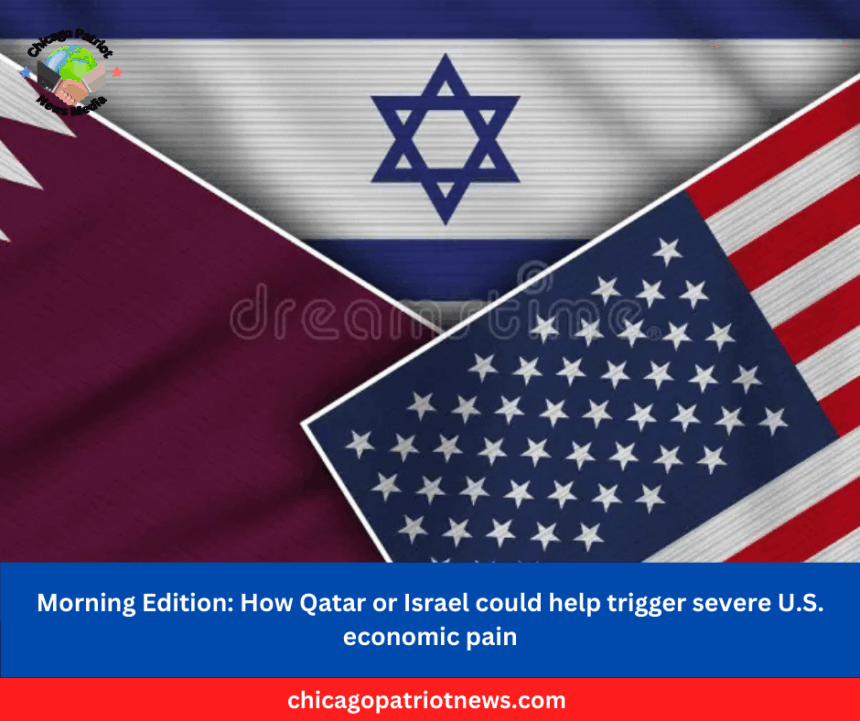
Morning Edition: How Qatar or Israel could help trigger severe U.S. economic pain

Mujeeb Osman
Last updated: September 13, 2025 6:26 am
Mujeeb Osman 8 months ago
Share
SHARE

Chicago – September 13, 2025

1) Global energy shock (mainly via Qatar)

Qatar is one of the world’s largest LNG exporters and a top global energy supplier. Large, sudden disruptions to Qatari LNG production or exports — from attacks, blockades, or an extended regional conflict — would tighten global gas and fuel markets, push world energy prices higher, and cause inflationary pressure in the U.S. (energy prices feed into transport, manufacturing and household costs). Qatar’s central role in LNG markets is well documented. 

How that could hurt the U.S.: higher imported energy costs, second-round inflation, and tighter global financial conditions if central banks raise rates in response. Note: the U.S. has grown domestic energy output, which cushions but does not eliminate exposure to global price shocks. 

2) Shipping / trade disruptions tied to regional conflict

Attacks in the Red Sea / around the Suez or a widening regional war can force cargo reroutes (longer voyages around Africa), spike freight and insurance costs, and interrupt complex supply chains for parts and finished goods. That raises costs for U.S. firms and consumers and can cause inventory shortages and production slowdowns. The IMF and several think-tanks documented how Red Sea disruptions sharply cut Suez traffic and raised freight costs in 2024–25. 

3) Financial channels — investments and confidence

Qatar’s sovereign wealth (QIA) is a major global investor, including in U.S. real estate, equities and projects. In a panic or severe geopolitical dispute, forced asset sales or sharp portfolio re-allocations by large foreign funds could add volatility to U.S. asset markets and raise borrowing costs. Qatar’s investment footprint in the U.S. is significant, though diversified. 

4) Tech / trade shocks via Israel

Israel is deeply integrated into high-tech supply chains (semiconductors, cyber, defense tech, medical devices). A prolonged conflict that disrupted production, exports, or investment could raise costs or delay inputs for U.S. tech firms and startups that rely on Israeli partners or talent. Reuters and others have documented the downturn in Israel’s economy during major hostilities. 

5) Contagion, confidence, and policy cost

The real danger is compounding shocks: if higher energy prices, trade disruption, reduced foreign demand/investment, and a financial market sell-off occur together, U.S. growth could slow sharply. That could force the Fed and government into difficult choices (higher interest rates vs. supporting growth), increasing recession risk.

You Might Also Like

Night Line: Kevin Warsh confirmed as Federal Reserve Chair in 54–45 senate vote succeeding Jerome Powell

Morning Edition: The law sets a 60-day limit on unauthorized wars. The US is blowing past it in Iran

Night Line: Trump Re-nominates Cameron Hamilton to Lead FEMA After Last Year’s Firing

Night Line: Democratic Primaries Expose Party Rift Over AIPAC and Israel Policy

Night Line: Hegseth Seeks Second Pentagon Probe of Sen. Mark Kelly Over Alleged Leaks

Share This Article
Facebook Twitter Email Print
By Mujeeb Osman
With 26 years of journalism experience across Urdu and English newspapers, he has built a reputation for thoughtful, community-focused reporting. Mujeeb Osman previously served as the Chicago in-charge of The Muslim Observer, where he covered local, national, and international issues impacting diverse communities. At Chicago Patriot News, he continues his commitment to delivering accurate, balanced, and compelling stories. His work reflects a deep interest in immigration issues, public policy, and American politics, areas he has followed closely throughout his career. At Chicago Patriot News, he continues his commitment to delivering accurate, balanced, and compelling stories that illuminate the challenges and perspectives shaping today’s public discourse.
Previous Article Morning Edition: Prophet Muhammad ﷺ as Khatam an-Nabiyyīn – The Final Messenger
Next Article Morning Edition: UN General Assembly Overwhelmingly Backs Two-State Solution for Israel and Palestine in Landmark Vote

Our Mission

Search CPN

Latest News

  • Morning Edition: Harrison Ford Tells Graduates: “Go Change the World” in Inspiring Commencement Speech
  • Morning Edition: Microsoft Israel chief leaves after inquiry into use of tech to spy on Palestinians
  • Morning Edition: Filmmakers slam BBC after Gaza documentary wins award despite being dropped
  • Night Line: Kevin Warsh confirmed as Federal Reserve Chair in 54–45 senate vote succeeding Jerome Powell
  • Night Line: Trump visits China for high-stakes meeting with Xi Jinping as US-Iran conflict likely to dominate strategic calculations
  • Night Line: Udhayanidhi Stalin’s “Sanatan” Remarks Spur National Debate; Critics Accuse BJP of Political Polarisation

Disclaimer

Chicago Patriot News MediaChicago Patriot News Media
Follow US
© 2025 CPN. All Rights Reserved by Chicagopatriotnews.com
Welcome Back!

Sign in to your account

Register Lost your password?
