
Chicago – May 26, 2025
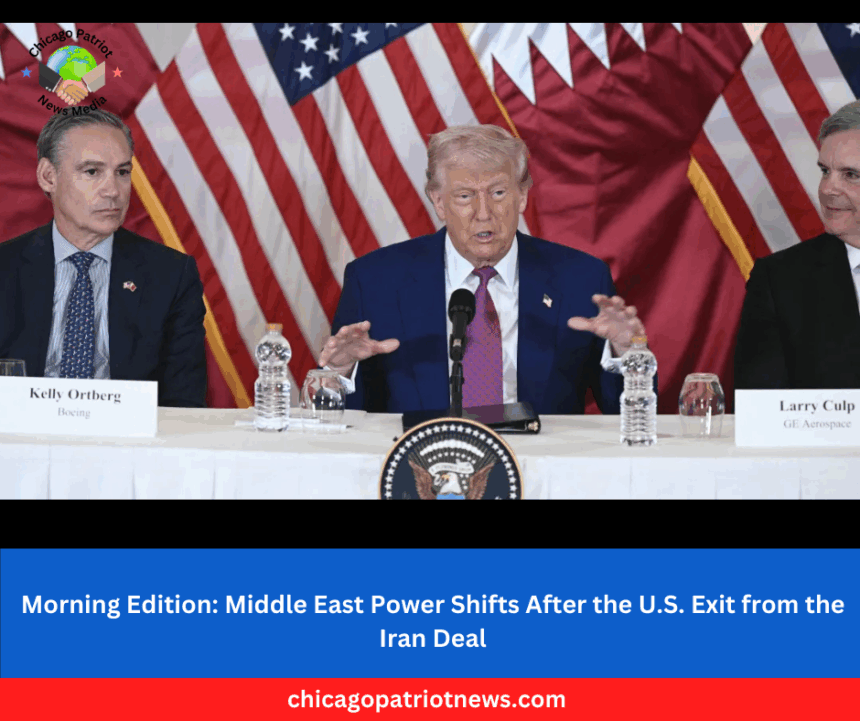
The Trump administration’s 2018 withdrawal from the Iran nuclear deal (JCPOA) fundamentally altered the strategic balance of the Middle East. While intended to exert “maximum pressure” on Iran, it had broader, more complex ripple effects that continue today.
Iran’s Position:
Iran’s economy has undeniably suffered under renewed U.S. sanctions. The country’s oil exports plummeted, inflation surged, and domestic unrest intensified, weakening its regional ambitions. Yet, Iran has proven resilient, continuing its influence operations in Iraq, Syria, Lebanon, and Yemen. Claims that Iran is “significantly weaker” are partly true economically, but militarily and strategically, Iran has maintained leverage, especially through its proxy networks.
Saudi Arabia’s Ascendancy:
Saudi Arabia capitalized on this situation by strengthening its ties with the U.S. and Israel (via the Abraham Accords momentum) while gradually repositioning itself as a more moderate, diplomatically active power. Mohammed bin Salman’s outreach to China and tentative de-escalation with Iran (like the 2023 Beijing-brokered Saudi-Iran deal) reflect Riyadh’s new pragmatism. Saudi Arabia is stronger economically and diplomatically, but its domestic human rights record and authoritarianism still constrain its image globally.
Israel’s Shifting Position:
Israel’s traditional strategic edge — backed by unconditional U.S. support — faces new complexities. While it remains a military powerhouse, its relations with Arab neighbors are no longer solely dependent on mutual hostility towards Iran. The Gaza conflict, growing Western criticism of Netanyahu’s government, and Arab states’ nuanced diplomacy (balancing U.S., Israeli, and Iranian interests) mean Israel has less freedom to act without regional and international consequences.
Trump’s Leverage, If Any:
If Donald Trump or a like-minded figure were to return to power, their ability to “control” Israel would be limited. While past U.S. administrations have had significant sway, Israel has demonstrated a willingness to defy even its closest ally when it perceives existential threats. The idea of Trump uniquely positioning himself between Israel and Iran is theoretically plausible but practically fraught, given his past alienation of regional actors, inconsistent policies, and the deepening multipolar nature of Middle Eastern diplomacy (with China and Russia now active players).
What This Means: The region is no longer a simple U.S.-centric chessboard. Saudi Arabia and Iran’s cautious rapprochement, Israel’s delicate position, and Iran’s continued proxy influence create a more pluralistic, volatile, and transactional Middle East. Any American administration seeking to reshape it will need to acknowledge these new realities: a diplomatically assertive Saudi Arabia, a strategically resilient Iran, and an Israel balancing domestic politics with external pressures.
Bottom line: The power dynamics have shifted — not in a way that makes any one player completely dominant, but rather in creating a multipolar, diplomatically complex region where old alliances can no longer be taken for granted.