

Chicago Friday May 16, 2025
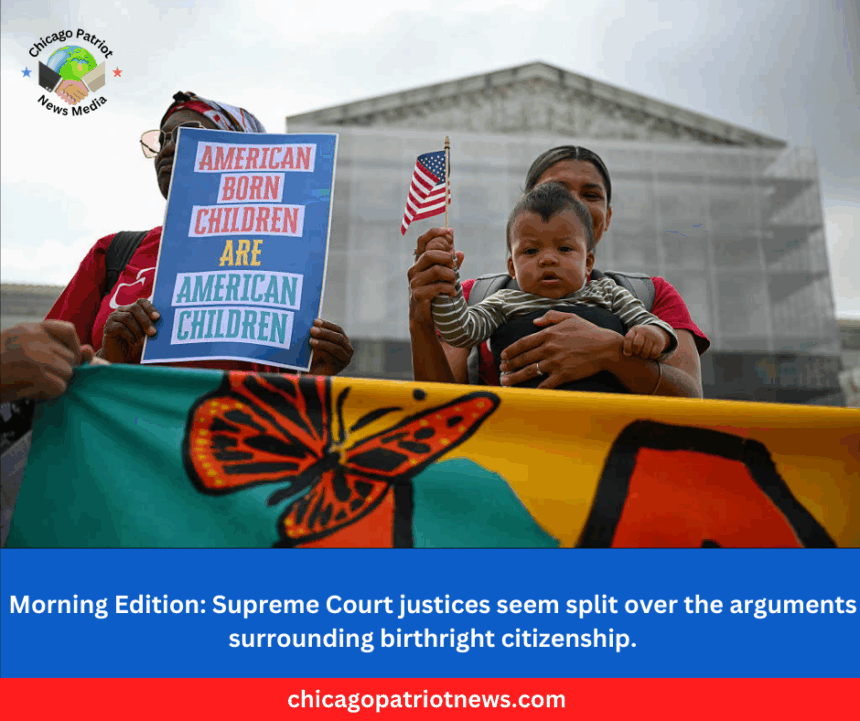
On Thursday, the U.S. Supreme Court appeared at least partly divided as it listened to over two hours of arguments concerning how lower courts should respond to President Trump’s executive order on birthright citizenship. Trump has consistently argued that birthright citizenship doesn’t exist, despite a Supreme Court ruling from 127 years ago affirming that the Fourteenth Amendment grants automatic citizenship to anyone born on U.S. soil. That amendment, adopted after the Civil War, has been interpreted since then to support this view.
Still, undeterred by precedent, Trump issued an executive order on his first day back in office this year, declaring that children born in the U.S. to undocumented immigrants or temporary visa holders are not automatically citizens. Immigrant advocacy organizations and 22 states challenged the order, and three separate federal district court judges struck it down, issuing nationwide injunctions to prevent its enforcement.
When appellate courts declined to pause the injunctions during ongoing litigation, the Trump administration appealed to the Supreme Court, asking it to eliminate the use of universal injunctions. They argued that individual district judges shouldn’t wield such sweeping power. The justices heard emergency arguments in the case on Thursday.
Conservative justices didn’t fully reveal their positions. While some have previously criticized nationwide injunctions, they seemed less certain this time, especially after Solicitor General D. John Sauer began his argument by claiming that the Fourteenth Amendment has been misinterpreted for over a century.
According to Sauer, the amendment was originally meant to guarantee citizenship only to formerly enslaved individuals’ children, not to children of undocumented immigrants or short-term visitors. He also contended that the judges who temporarily blocked the order overstepped their constitutional limits.
Justice Sonia Sotomayor raised a sharp hypothetical: If a president ordered the confiscation of all firearms, would courts have to wait until every affected person filed a lawsuit before stepping in?