

Chicago – October 1, 2025
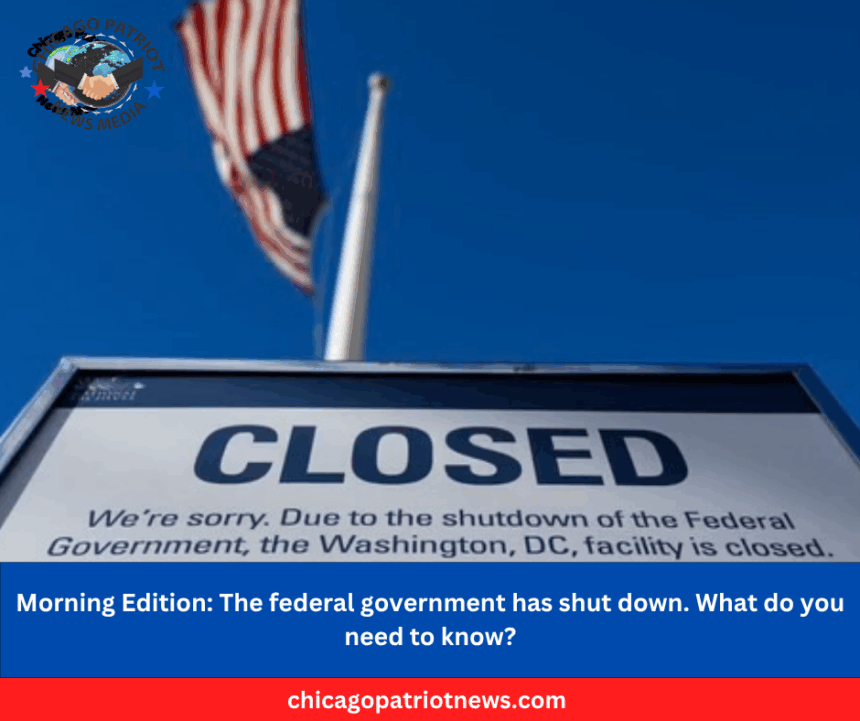
The federal government has shut down as congressional lawmakers remain at odds over funding the government beyond September 30.
Although Republicans control Capitol Hill and the White House, they need at least seven Democrats in the Senate to join them to pass a spending package under the chamber’s rules. Senate Minority Leader Chuck Schumer, however, is demanding any funding bill contain an extension of the enhanced Affordable Care Act premium subsidies, along with several other items, to get his party’s support. GOP leaders want an extension of funding for seven weeks, with additional money for security for the legislative, executive and judicial branches.
With the impasse unresolved, the government shutdown could be unlike any other in recent memory. While no two shutdowns are exactly the same, President Donald Trump and the White House Office of Management and Budget have already signaled that they are willing to use a totally different playbook — urging agencies to downsize workers in programs whose funding has lapsed and which don’t align with Trump’s priorities.
What is a government shutdown?
Congress must provide funding for many federal departments and functions every fiscal year, which begins on October 1. If lawmakers fail to pass a spending package for the full year or extend funding for a shorter period, known as a continuing resolution, then many agencies and activities must shutter until Congress appropriates more money.
Since lawmakers have yet to pass through both chambers any of the 12 appropriations bills that make up the federal discretionary spending budget, this government shutdown will be considered a full shutdown.
During prior impasses, Congress approved annual funding for certain agencies, which allowed them to continue operating while other federal departments went dark. That situation is known as a partial shutdown.
Since 1980, there have been 14 government shutdowns, not counting the current impasse, according to the Bipartisan Policy Center.