

Chicago – November 07, 2025
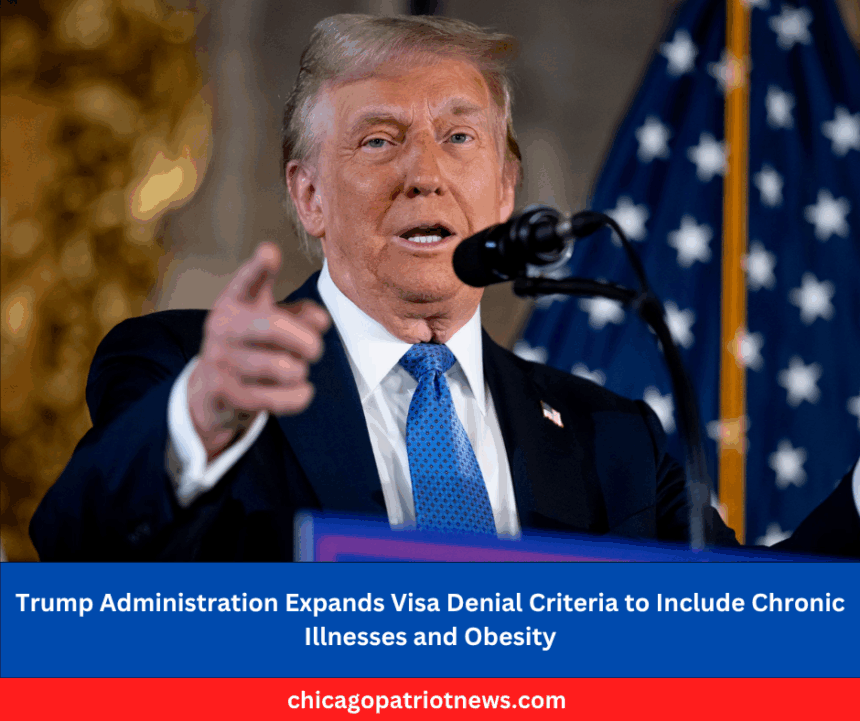
Foreigners applying for U.S. visas could now be denied entry if they have chronic health conditions such as diabetes, heart disease, or obesity, under a new Trump administration directive that significantly broadens medical-based exclusions for immigrants.
The policy, detailed in a State Department cable obtained by KFF Health News, instructs consular officers to weigh a wide range of illnesses—including cardiovascular, respiratory, neurological, and mental health disorders—when assessing whether an applicant could become a “public charge,” or a financial burden on the U.S. government. Officers are told to evaluate whether individuals can cover potential medical expenses for the rest of their lives without relying on public assistance.
The guidance marks a sharp shift from prior practice, which limited medical screening to communicable diseases such as tuberculosis and required proof of vaccination. Immigration and health experts warn the new rules grant sweeping discretion to visa officers, who are not medically trained, to reject applicants based on speculative future costs or perceived inability to work.
“This encourages unqualified officials to make health judgments based on bias or guesswork,” said Charles Wheeler, senior attorney at the Catholic Legal Immigration Network, noting the guidance contradicts the State Department’s Foreign Affairs Manual, which prohibits rejections based on hypothetical risks.
The directive also instructs officers to review the health of applicants’ family members, asking whether dependents’ disabilities or chronic illnesses might affect the applicant’s employability or financial independence.
Critics, including immigration lawyer Sophia Genovese of Georgetown University, say the policy reflects the Trump administration’s broader effort to restrict immigration to wealthier, healthier applicants. She called it “an expansive and troubling move” that allows officials to deny visas for “conditions common across the world,” including those affecting millions of people globally.
Roughly 10% of the world’s population lives with diabetes, and cardiovascular disease remains the leading cause of death worldwide. Advocates argue that treating such chronic illnesses as disqualifying conditions raises profound ethical and humanitarian questions about who deserves entry into the United States.
The State Department has not commented on when the new screening criteria will take effect or how they will be implemented across U.S. embassies and consulates.