

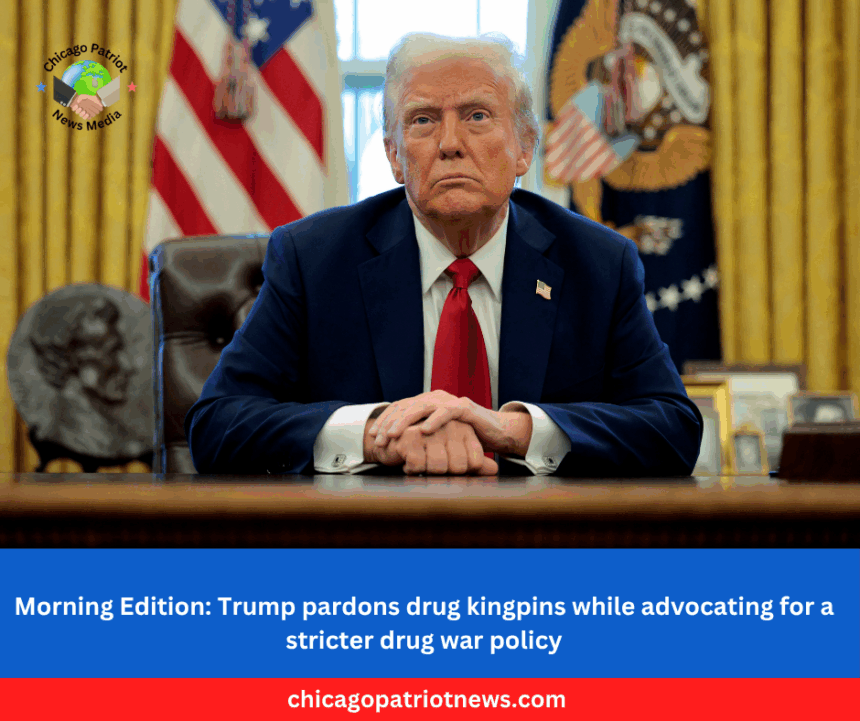
Chicago – June 02, 2025
Former President Donald Trump’s approach to drug policy has been marked by a notable contradiction: while vocally advocating for the death penalty for drug dealers, he has simultaneously granted clemency to several individuals convicted of serious drug offenses. In 2018, Trump proposed imposing capital punishment on major drug traffickers, asserting that such measures would deter drug-related crimes and save lives.
Contrastingly, during his presidency, Trump issued pardons and commutations to numerous individuals involved in significant drug offenses. Notably, he commuted the sentence of Larry Hoover, co-founder of the Gangster Disciples, who was serving multiple life sentences for drug trafficking and related crimes. Additionally, Trump granted clemency to Ross Ulbricht, the founder of the Silk Road online marketplace, which facilitated extensive illegal drug sales.
Critics argue that these clemency decisions undermine Trump’s tough-on-drugs rhetoric and suggest a pattern of favoritism, particularly towards individuals with political connections or public support. Former New Jersey Governor Chris Christie criticized Trump’s pardons, highlighting concerns about the legitimacy of white-collar crime enforcement and suggesting that political loyalty influenced clemency decisions.
This dichotomy in Trump’s drug policy—advocating severe penalties while granting clemency to high-profile offenders—raises questions about consistency and the factors influencing presidential clemency decisions.