

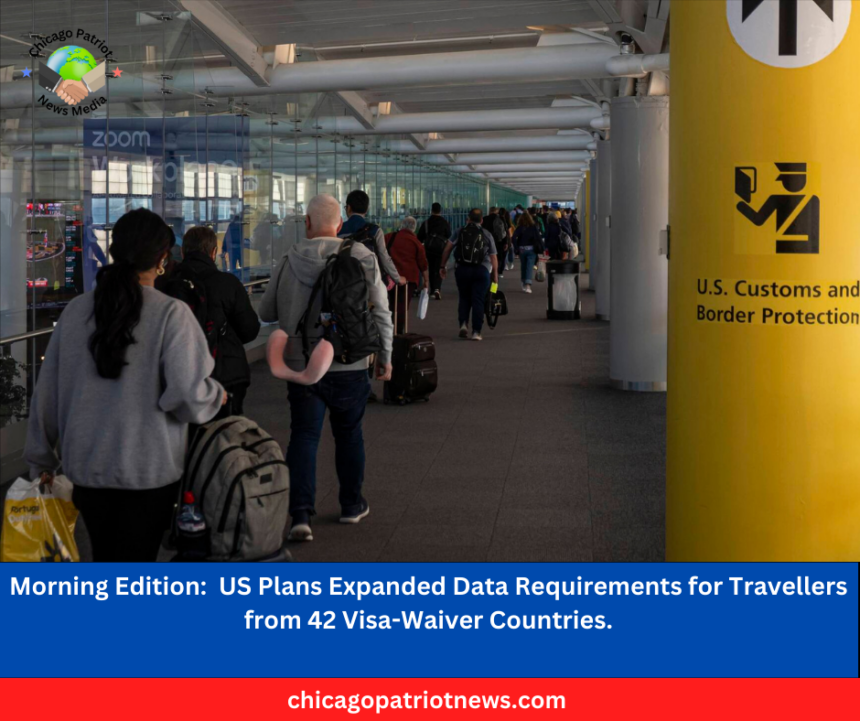
Chicago – December 11, 2025
Travellers from 42 nations who currently enter the United States without a visa may soon face significantly stricter screening. The Department of Homeland Security (DHS) has proposed new rules that would require visitors to disclose far more personal information including their online activity, email history, family details and biometric data before being approved for travel.
A notice published in the Federal Register on Wednesday outlines the Department’s intention to expand data collection for individuals applying through the Electronic System for Travel Authorization (ESTA). ESTA is used by citizens of visa-waiver countries such as the UK, Germany, Greece, Qatar, Australia, New Zealand, Japan, Israel and South Korea, allowing them to visit the US for up to 90 days without a visa.
What ESTA Applicants Currently Provide
Until now, ESTA’s automated system has required only basic information, including:
- Parents’ names
- A current email address
- Limited background and criminal history information
Unlike traditional visa applications, travellers do not undergo an in-person interview at a US embassy or consulate.
What the New Proposal Would Change
Under the updated requirements, US Customs and Border Protection (CBP) may request a much larger set of personal data, including:
- Up to 5 years of social media history
- Telephone numbers used over the past 5 years
- Email addresses used over the past 10 years
- Detailed information about family members, including birthplaces and past phone numbers
- Metadata from digital photographs submitted with the application
- Expanded biometric data, such as fingerprints, DNA samples and iris scans
CBP described these as “high-value data fields” that would be added to ESTA “when feasible.”
Why Is the US Seeking Additional Information?
The proposal does not explicitly explain what officials will analyze in travellers’ social media accounts or how the data will be used. However, CBP stated that these changes are part of its effort to comply with an executive order signed by former President Donald Trump, requiring stronger vetting procedures to block potential national security threats.
What Happens Next?
The proposed changes are currently open for public comment before any final decision is made. If approved, the new rules would significantly increase the level of scrutiny for millions of travellers from visa-waiver nations each year transforming the ESTA process into something much closer to a traditional visa application.