

Chicago – March 17, 2026
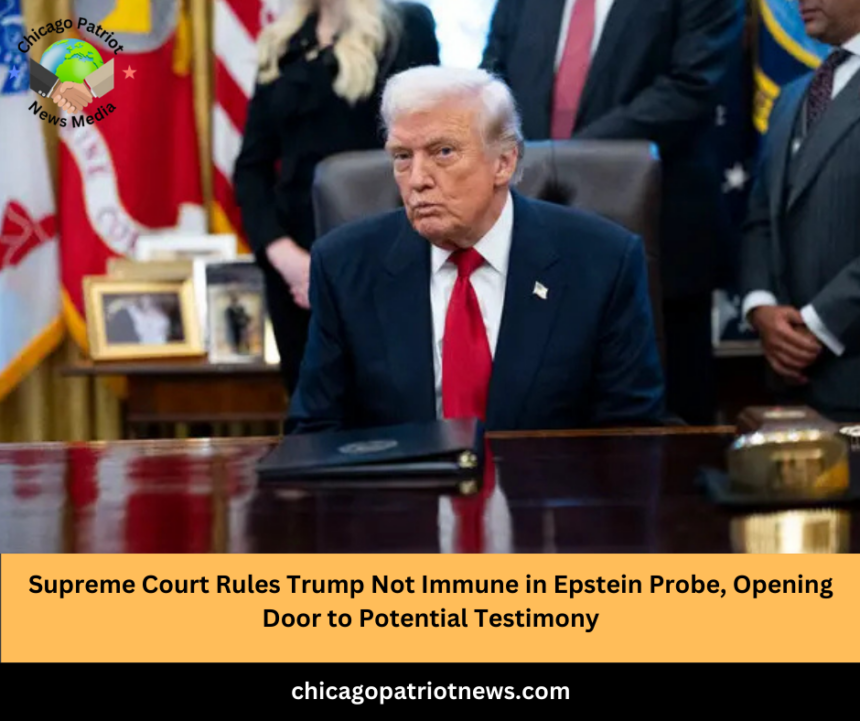
A landmark decision by the U.S. Supreme Court has drawn renewed attention in Washington, ruling that President Donald Trump does not enjoy absolute immunity in matters related to the Jeffrey Epstein investigation. This means that subpoenas and other legal processes could potentially compel his testimony if deemed relevant by investigators.
The ruling reinforces a fundamental constitutional principle: holding the presidency does not place someone beyond legal scrutiny when serious investigations are involved. By rejecting the claim of total immunity, the Court affirmed that the justice system must have the ability to pursue accountability, even for high-ranking officials.
The decision arrives amid renewed focus on testimony linked to the broader Epstein probe, including statements recently provided by former President Bill Clinton. Analysts suggest these developments underscore the potential relevance of testimony from other prominent figures in understanding the full scope of Epstein’s activities and network.
In Washington, the ruling has sparked intense political debate. The prospect that a former president could be compelled to testify in such a high-profile investigation raises questions about executive authority, legal accountability, and the limits of presidential protections.
The decision comes after months of legal wrangling over access to documents and testimony in Epstein-related cases. Trump’s legal team and supporters have argued that executive privilege and other protections should constrain investigators. However, the Court’s ruling makes clear that such protections are not absolute when investigative needs outweigh them.
Legal experts say the next stages of this case could become one of the most closely watched legal confrontations in recent years. Observers are now questioning whether testimony from Trump or other figures will shed light on unresolved aspects of Epstein’s network, or whether the investigation will continue to raise complex questions about power, influence, and accountability.