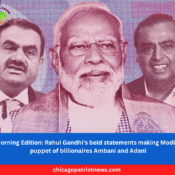


Chicago – July 14, 2025
Over the past decade, under Prime Minister Narendra Modi, India has increasingly shifted from a pluralistic democracy to a more authoritarian state. Modi, leading the Bharatiya Janata Party (BJP) with support from local allies in northern India, has systematically undermined the democratic institutions that once defined the country.
Shortly after assuming office in 2014, Modi made his first move to control information flow by installing surveillance cameras at ministry entrances, while also withdrawing the Press Information Bureau (PIB) cards that allowed senior journalists to access government offices and communicate freely with civil servants. This decision, made just weeks into his tenure, effectively stifled independent reporting and limited press access to government affairs.
The situation worsened in Modi’s second term when the government imposed stricter regulations on media access. Journalists were required to sign in visitors personally at ministry reception desks, eliminating informal communication between government officials and the public. This policy further centralized power and curbed transparency, ensuring that only the narrative Modi’s government wished to present reached the public.
Moreover, critics, including journalists, activists, and academics who have spoken out against the administration, have been subjected to harassment, imprisonment without trial, and charges on dubious grounds. The erosion of civil liberties and the crackdown on dissent have raised alarm about India’s democratic health.
What began as a series of incremental actions has now culminated in a full-scale assault on India’s democratic foundations. As Modi continues to consolidate power, many fear that the country is on a dangerous path toward a one-party, fascist state, marking the end of India’s pluralistic democracy.