

Chicago – July 21, 2025
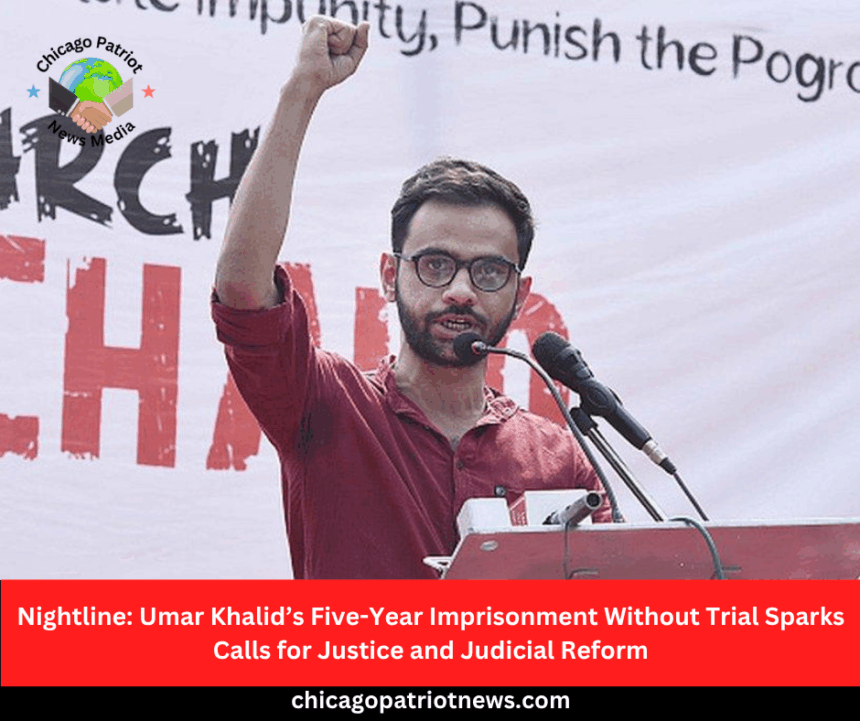
Activist Umar Khalid has been in jail for the past five years, sparking concerns about the delay in legal proceedings against him. Observers are pointing out that even during India’s Emergency period (1975-77), when many political activists were detained, individuals were typically released after two to two-and-a-half years. This prolonged detention without trial has raised questions about the fairness and efficiency of the judicial process.
In 2016, Kanhaiya Kumar, a student leader, faced sedition charges similar to those against Khalid. However, Kumar was granted bail and is currently out of jail. This difference in treatment has drawn criticism from legal experts and human rights advocates who demand transparency and consistency in the application of justice.
“If Umar Khalid is guilty, he should be punished after a fair trial. But five years without starting the trial is unacceptable,” said a rights activist. There is growing pressure on the authorities to either produce evidence for prosecution or allow Khalid’s bail. Supporters argue that the right to a speedy trial is fundamental to democracy and justice, and prolonged pre-trial detention damages these principles.
As of today, Umar Khalid has spent 1706 days in jail without a trial. Countless judges have stated that bail is the rule, and jail is the exception. So, why has Umar Khalid been in jail for 1706 days without a trial? This question was raised even after the retirement of former Chief Justice D.Y. Chandrachud and will continue to be raised in the future.