

Chicago Thursday, June 5th, 2025
The Arrival of Islam in India
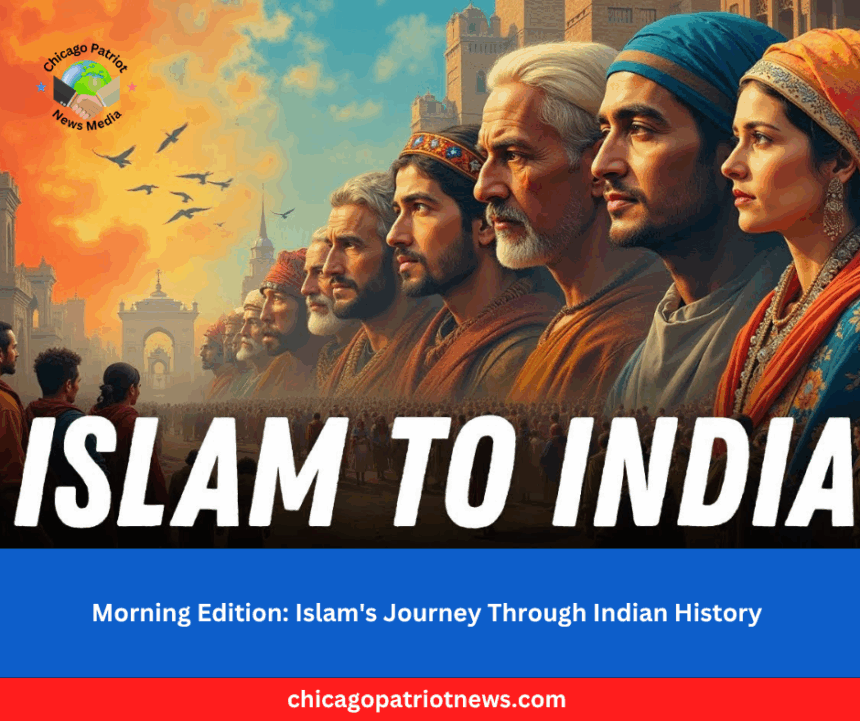
Islam came to India through trade, conquest, and Sufi missionary work. In the 7th century, Arab traders reached the Malabar Coast, creating early Muslim communities in Kerala. The first major Islamic invasion was led by Muhammad bin Qasim in 712 CE, who conquered Sindh. Later, the Ghaznavid and Ghurid invasions helped spread Islam further. Mahmud of Ghazni’s raids and Muhammad Ghori’s victory at the Battle of Tarain in 1192 paved the way for the Delhi Sultanate.
The Role of Sufi Saints
Sufi saints played a big role in spreading Islam peacefully. They taught people about spirituality and helped those in need. Many people, especially from lower castes, were attracted to their message and converted to Islam. The Sufis’ approach was different from the rulers, who often used force to expand their territories. The Delhi Sultanate and the Mughal Empire, which ruled much of India from the 13th to the 19th century, also contributed to Islam’s growth.
Legacy of Islam in India
Today, India has the third-largest Muslim population in the world. Islam’s spread in India was shaped by both force and peaceful exchange over many centuries. The religion blended with local cultures, creating a unique identity. The legacy of Islam in India can be seen in its architecture, art, and literature. From the Delhi Sultanate to the Mughals, each era left its mark on the subcontinent’s cultural landscape.