

Chicago – September 19, 2025
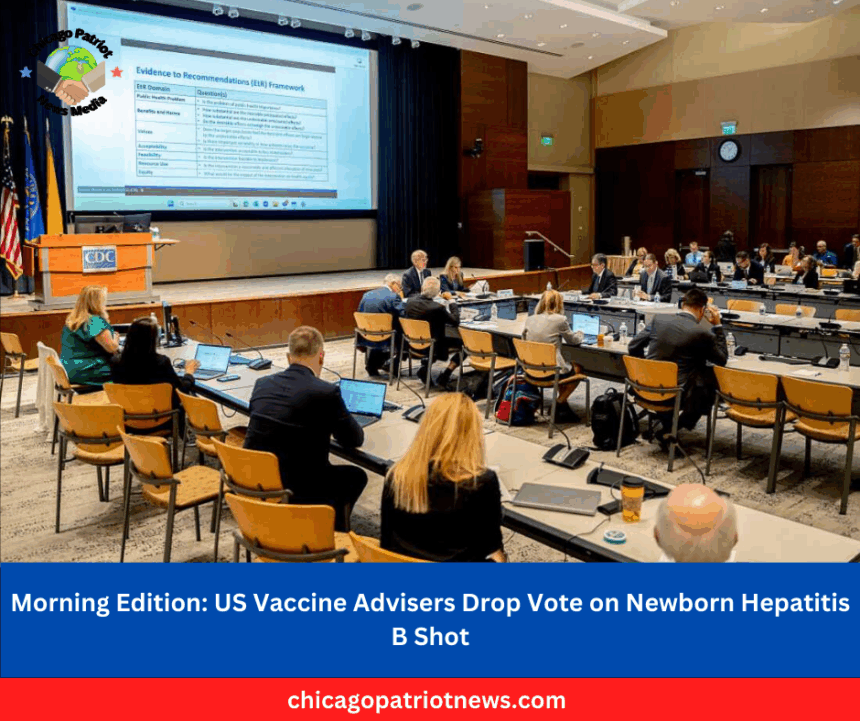
A newly formed U.S. vaccine advisory panel, appointed by Health Secretary Robert F. Kennedy Jr., has postponed the vote on changing the hepatitis B vaccination schedule for newborns. The committee was expected to decide whether to delay the first dose of the hepatitis B vaccine from within 24 hours after birth to at least one month of age for infants born to mothers who test negative for hepatitis B. Instead, the vote was dropped due to “ambiguities” in the proposed policy language and concerns about insufficient evidence.
The hepatitis B birth-dose vaccination, a policy in place since 1991, has been credited with drastically reducing infection rates and preventing chronic liver diseases in children. Some panel members argued that delaying the vaccine could increase health risks for infants, while others expressed skepticism about the vaccine’s safety immediately after birth.
The decision comes amid broader controversies and restructuring of the advisory committee, many members of which have voiced vaccine-skeptical views. The panel also voted against the combined measles, mumps, rubella, and varicella (MMRV) vaccine for children under four, favoring separate doses to reduce seizure risks. The future timeline for revisiting the hepatitis B vaccine vote remains unclear.
This development has raised concerns among public health experts worried about the impact on childhood immunization programs.