
Chicago — November 12, 2025
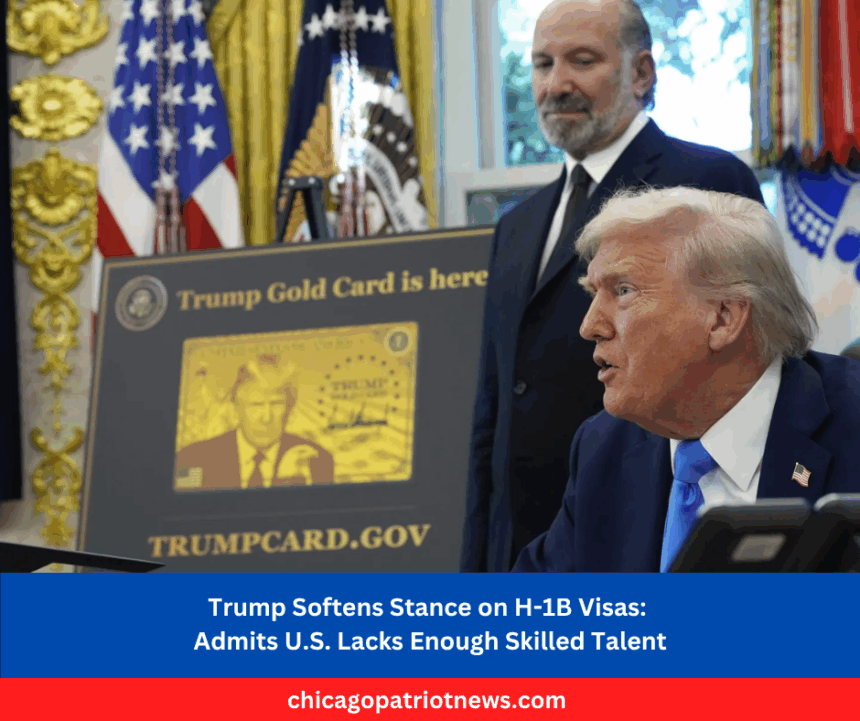
In a rare reversal from his usual hardline immigration tone, U.S. President Donald Trump has publicly defended the H-1B visa programme, saying America “needs to bring in talent” from abroad to fill key skilled positions that domestic workers cannot yet meet.
Speaking to Fox News, Trump rejected the suggestion that the U.S. has enough qualified workers for advanced sectors. “You don’t have certain talents,” he said bluntly. “You can’t take people off an unemployment line and put them in a factory where we’re going to make missiles.” The comments mark one of Trump’s strongest acknowledgements of foreign talent’s role in sustaining U.S. innovation and manufacturing competitiveness.
The remarks came less than two months after his administration raised the H-1B annual fee to $100,000, triggering alarm among U.S. companies and expat professionals, especially from India, who make up the majority of H-1B holders. Under the September 19 proclamation, employers must pay the new fee before visa holders can enter the U.S., although the White House later clarified that the rule applies only to new applicants, not existing workers.
The fee hike is part of a broader Trump-era immigration overhaul aimed at tightening foreign labour inflows while “prioritising American jobs.” However, business leaders and tech firms have warned that excessive restrictions could undercut U.S. innovation in key industries such as defense technology, artificial intelligence, and semiconductor manufacturing.
During the same interview, Trump referenced an Immigration and Customs Enforcement (ICE) raid on a Hyundai battery facility in Georgia, where over 300 South Korean engineers were detained. “Making batteries is very complicated—very dangerous, a lot of explosions. You’re going to need that,” he said, suggesting that specialized foreign expertise remains indispensable.
The South Korean government has since launched a probe into alleged human rights violations, claiming it received no prior notice of the raid. Trump, who visited Seoul last month, distanced himself from the operation, saying he was “very much opposed” to how it was conducted.
Analysts say Trump’s remarks reflect a pragmatic recalibration rather than a policy shift—acknowledging America’s dependence on global talent while maintaining his administration’s broader stance on “merit-based” immigration.