

Chicago – November 28, 2025
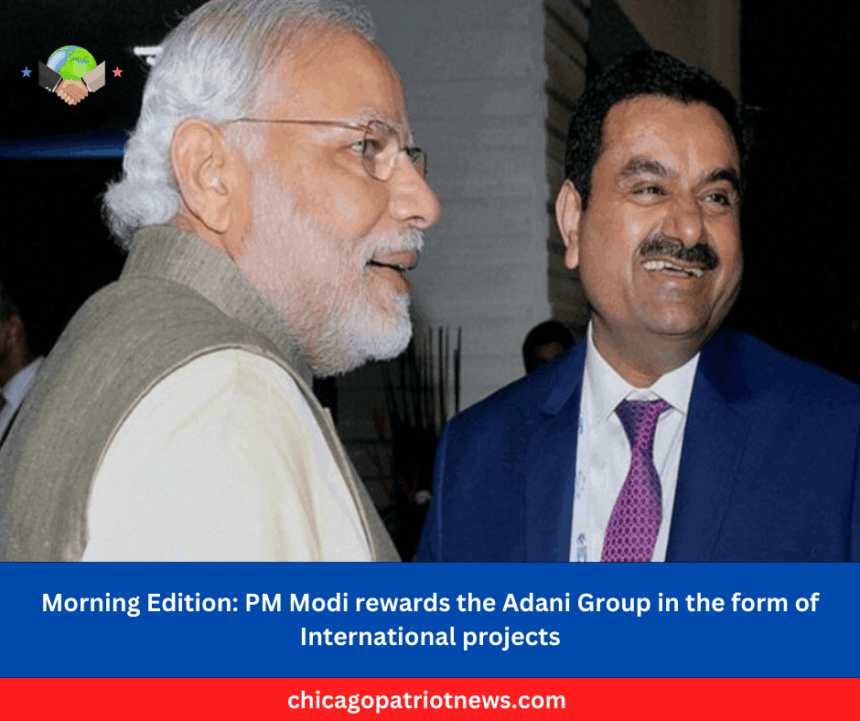
The business empire of Adani Group soared significantly over the last two decades, and many critics argue that this rapid expansion was enabled by a close relationship between Modi (who previously served as Chief Minister of Gujarat) and the conglomerate’s founder, Gautam Adani.
A 2023 report by a U.S.-based firm (Hindenburg Research) accused Adani Group of “brazen stock manipulation and accounting fraud,” alleging that the group used opaque offshore entities (in tax-havens like Mauritius, U.A.E., and Caribbean jurisdictions) to inflate revenues and artificially boost share prices — helping the group rack up a much higher market valuation than underlying fundamentals could justify.
Related concerns include high debt levels across Adani’s firms, repeated changes in their chief financial officers (a red flag for weak financial controls), and aggressive use of leverage — all contributing to worries that the conglomerate’s financial health might be overstated.
Some opposition politicians also accuse the government of granting the Adani Group preferential treatment: winning contracts domestically and abroad (for example, after diplomatic visits), benefiting from favorable regulatory outcomes, or avoiding rigorous scrutiny despite serious red-flags.
As a result, critics argue that the ties between Modi and Adani amount to “crony capitalism” — using political influence to benefit private business interests — which threatens fair competition, transparency, good governance, and public trust in democratic institutions.
You can also read: Night Line: Delhi High Court’s Decision on PM Modi’s Educational Degree Sparks Political Debate