

Chicago – December 09, 2025
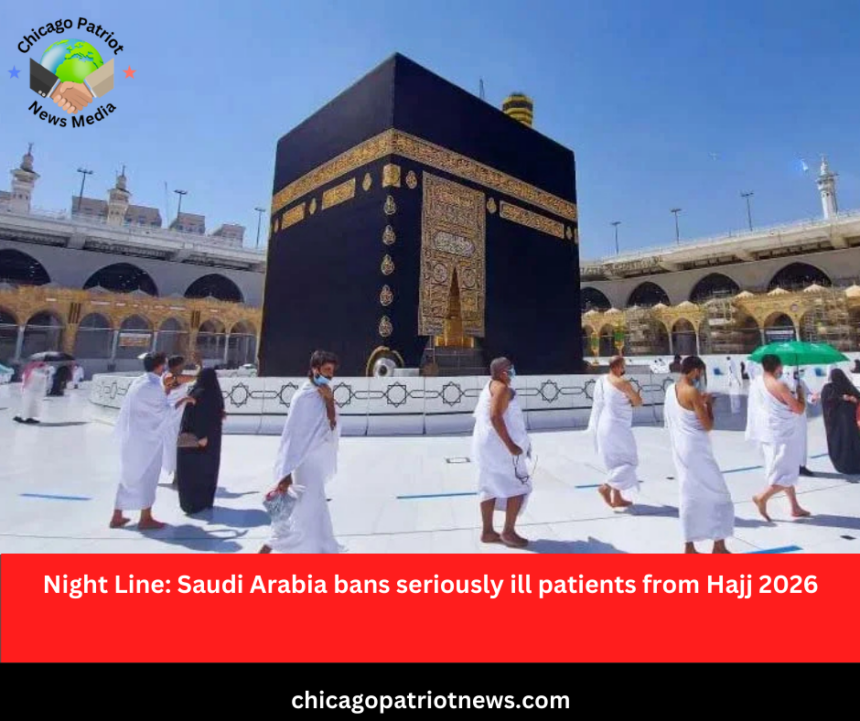
Saudi Arabia has introduced tough new health regulations that bar seriously ill and high‑risk patients from performing Hajj 2026, citing pilgrim safety and public health concerns. The policy targets individuals whose medical conditions could worsen during the physically demanding pilgrimage or pose risks to others.
New health restrictions
Under the directives of the Saudi Ministry of Health, patients with advanced heart disease, kidney failure or those undergoing dialysis, serious liver and lung conditions, cancer, and severe neurological or psychiatric illnesses are prohibited from undertaking Hajj. Elderly pilgrims with frailty, dementia, Alzheimer’s, epilepsy, or significant memory impairment are also excluded, along with pregnant women and those suffering from infectious diseases such as whooping cough, tuberculosis, and viral haemorrhagic fevers.
Enforcement and penalties
Saudi authorities have empowered medical teams and monitoring units to verify pilgrims’ fitness certificates and block ineligible cases before and after arrival. Pilgrims found travelling on fake or misleading medical certificates may be deported at their own expense, while doctors issuing such documents face disciplinary action from relevant authorities.