

Chicago – January 13, 2026
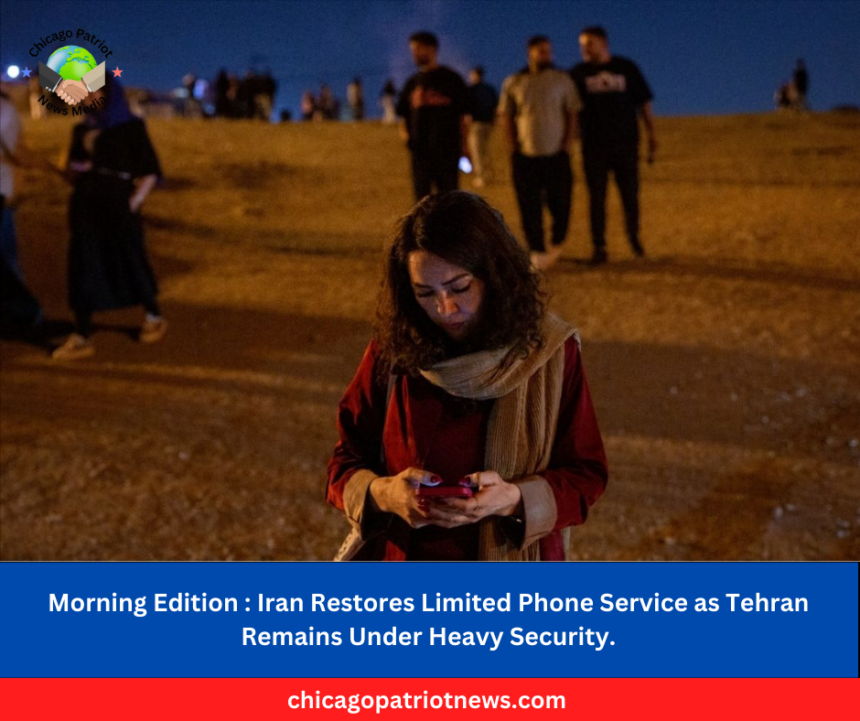
Iranians were able to make international mobile phone calls on Tuesday for the first time in several days, following a nationwide communications blackout imposed during a deadly crackdown on anti-government protests. Activist groups say at least 646 people have been killed since the unrest began.
Residents in Tehran confirmed they could briefly reach contacts abroad, including journalists, offering rare insight into life inside the capital after nearly five days of isolation. However, the restoration was only partial incoming calls could not be completed, SMS messaging remained unavailable, and access to the global internet was still blocked.
Heavy Security Presence Across Tehran
Witnesses described central Tehran as being under tight security control. Anti-riot police were stationed at major intersections, wearing helmets and body armor and carrying batons, shields, shotguns, and tear gas launchers. Members of Iran’s Revolutionary Guard and the Basij paramilitary force were also seen patrolling the streets, along with plainclothes security agents monitoring public areas.
The visible show of force reflects the government’s effort to suppress demonstrations that erupted in late December and spread rapidly across the country.
Damage to Banks and Government Buildings
During the protests, several banks and government offices were reportedly set on fire. ATMs were damaged, and financial services struggled to operate due to the internet shutdown, making basic transactions difficult for residents. While shops have reopened, foot traffic in Tehran remains extremely low, suggesting widespread fear and uncertainty.
Tehran’s Grand Bazaar, a major commercial hub and the birthplace of the protests, was scheduled to reopen Tuesday. However, shopkeepers told witnesses that they were ordered by security forces to resume operations regardless of conditions. Iranian state media has not publicly acknowledged this directive.
Internet Restrictions Still in Place
Despite the limited return of phone services, Iran’s digital isolation continues. Internet users can only access government-approved domestic websites, while global platforms and independent news sources remain blocked. This has made it difficult for Iranians to communicate with the outside world or share information about the situation on the ground