

Chicago – May 09, 2026
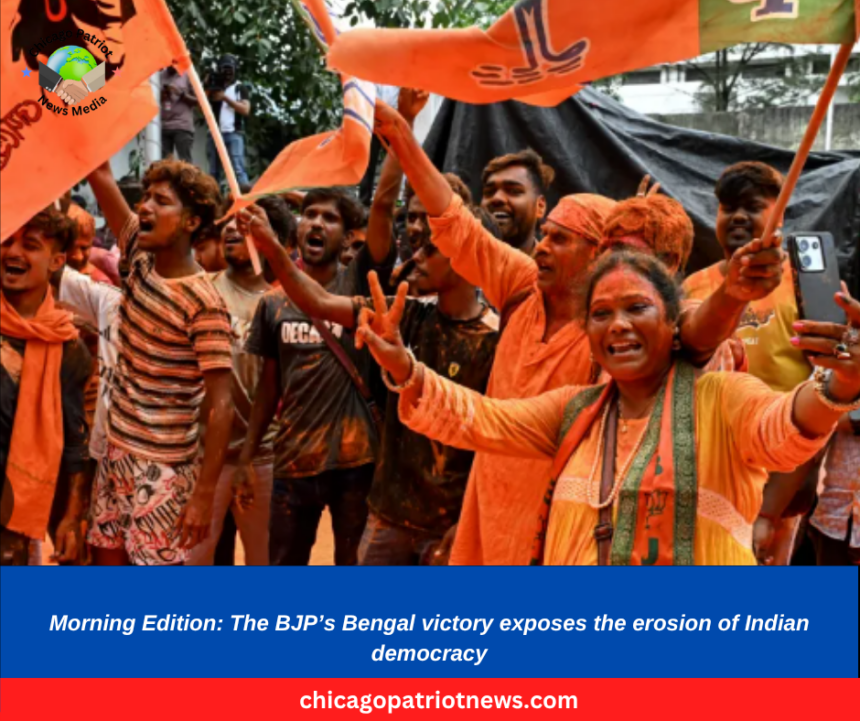
The Bharatiya Janata Party’s growing success in West Bengal marks more than an electoral achievement; it reflects a deeper transformation within Indian democracy. Bengal, once considered resistant to the BJP’s majoritarian politics, has increasingly become a battleground shaped by polarization, aggressive campaigning, and the weakening of democratic norms.
Supporters of the BJP argue that its rise demonstrates democratic vitality and voter dissatisfaction with regional parties. Yet critics see something more troubling: the concentration of political power, shrinking institutional independence, and the use of divisive rhetoric to consolidate electoral gains. The Bengal elections exposed how political discourse in India is becoming less about governance and more about identity, religion, and nationalism.
Equally concerning is the role of state institutions. Allegations of biased media coverage, pressure on opposition leaders, and selective use of investigative agencies have fueled fears that democratic safeguards are eroding. Elections may still occur regularly, but democracy requires more than ballots — it depends on fairness, dissent, and equal political space.
Violence during and after elections in Bengal further highlighted the fragile state of democratic culture. Political competition increasingly resembles hostility rather than healthy debate, leaving ordinary citizens trapped between rival power structures.
The BJP’s advance in Bengal therefore symbolizes a larger national trend: the gradual shift from pluralistic democracy toward centralized and confrontational politics. Whether India can preserve its democratic spirit will depend not only on election results, but on the strength of its institutions, civil society, and commitment to political diversity.